
Category: blog

  • E Learning App Development in Kolkata 2026: Create an App That Teaches Millions

    E Learning App Development in Kolkata 2026: Create an App That Teaches Millions

    E Learning App Development in Kolkata 2026

    Table of Contents

    • Summary
    • Introduction: A Small Idea Can Teach Millions
    • The Growing Demand for E-Learning Apps
    • Emotional Connection: Why Your App Matters
    • Planning Your E-Learning App the Right Way
    • Must-Have Features for a Successful Learning App
    • Design and User Experience: The Key to Engagement
    • Choosing the Right Development Partner
    • Scalability and Future Growth
    • Monetization: Turning Your App Into a Business
    • Challenges and How to Overcome Them
    • Future Trends in E-Learning Apps
    • Conclusion: Build an App That Truly Makes a Difference
    • Frequently Asked Questions

    Summary

    If you are planning to launch your own educational platform, e learning app development in Kolkata 2026 is your gateway to building something impactful and scalable. The demand for online learning is at its peak, and learners now expect flexible, mobile-first experiences. By working with the best e learning app development in Kolkata, you can create an engaging, feature-rich app that not only educates but also builds a strong brand. An experienced e learning app developer in Kolkata will help you transform your idea into a powerful platform with long-term growth potential. Whether your goal is to teach, inspire, or generate revenue, the right Kolkata e learning app development services can help you reach millions of learners across the globe.


    Introduction: A Small Idea Can Teach Millions

    There is a moment in every creator’s journey where an idea feels bigger than just a thought. Maybe it is your passion for teaching, your experience in a specific field, or your desire to make education accessible. That moment is where everything begins. With e learning app development in Kolkata 2026, that small idea can evolve into a platform that reaches thousands, even millions of learners.

    Learning today has moved beyond physical classrooms and is no longer restricted by location. A student sitting in a remote town can now access the same quality of education as someone in a big city. This transformation has opened doors for educators and entrepreneurs to build something meaningful. With the help of elearning mobile app development in Kolkata, your knowledge can travel far beyond physical boundaries.

    When you collaborate with skilled e learning app developers in Kolkata, you are not just building an app—you are creating a digital ecosystem where learning becomes easy, engaging, and accessible. This is your chance to build something that not only grows as a business but also creates real impact in people’s lives.


    The Growing Demand for E-Learning Apps

    The demand for online education has grown exponentially, and it continues to rise. People today are looking for flexible ways to learn, whether it is for academic purposes, career growth, or personal development. This shift has made e learning app development in Kolkata 2026 more relevant than ever.

    Learners want control over their education. They want to choose what they learn, when they learn, and how they learn. This demand has created opportunities for innovative platforms that offer personalized experiences. With mobile learning app development Kolkata, you can build an app that adapts to user preferences and delivers value consistently.

    Kolkata is becoming a strong center for digital innovation. Choosing the best e learning app development in Kolkata gives you access to skilled professionals who understand both technology and user behavior. This combination is essential for creating an app that stands out in a competitive market.


    Emotional Connection: Why Your App Matters

    At its core, an e-learning app is not just a digital product—it is a tool for transformation. When you invest in e learning app development in Kolkata 2026, you are creating opportunities for people to learn, grow, and succeed.

    Imagine a student who cannot afford expensive coaching but finds your app and learns everything they need. Imagine a professional who upgrades their skills through your platform and achieves their dream job. These are the stories that make your app meaningful.

    Working with the best e learning app development in Kolkata ensures that your platform is designed to engage users emotionally. It is not just about delivering content—it is about creating an experience that motivates learners to keep going.


    Planning Your E-Learning App the Right Way

    A successful app starts with proper planning. Before jumping into development, it is important to define your goals, target audience, and content strategy. This is a crucial step in e learning app development in Kolkata 2026.

    Understanding your audience helps you design an app that meets their needs. Whether you are targeting students, professionals, or niche learners, your app should reflect their preferences. A skilled e learning app developer in Kolkata will guide you through this process and help you make informed decisions.

    Planning also involves choosing the right features, technology stack, and monetization model. With professional Kolkata e learning app development services, you can create a roadmap that ensures smooth execution and long-term success.


    Must-Have Features for a Successful Learning App

    Features play a crucial role in the success of your app. A well-designed app should offer a seamless learning experience that keeps users engaged. With advanced e-learning android app development in Kolkata, you can integrate features that enhance usability and performance.

    Your app should include high-quality video streaming, interactive quizzes, progress tracking, and personalized recommendations. Such functionalities enhance the learning experience and improve overall effectiveness. With the help of e learning app developers in Kolkata, you can ensure that these functionalities are implemented smoothly.

    The goal is to create an app that feels intuitive and easy to use. When users enjoy the experience, they are more likely to stay and continue learning.


    Design and User Experience: The Key to Engagement

    Design is not just about aesthetics—it is about creating an experience. A simple and user-friendly interface significantly influences how users engage with your application. During e learning mobile app development in Kolkata, special attention is given to UI and UX.

    A well-designed app should be easy to navigate, visually appealing, and free from distractions. This helps users focus on learning without any interruptions. Working with the best e learning app development in Kolkata ensures that your app meets these standards.

    The overall user experience is essential for keeping users engaged and encouraging them to return. When users find your app easy and enjoyable to use, they are more likely to return and recommend it to others.


    Choosing the Right Development Partner

    The success of your app largely depends on the team you choose. A reliable e learning app development company in Kolkata brings expertise, experience, and a structured approach to your project.

    The right partner will guide you through every stage of development, from concept to launch. They will help you avoid common mistakes and ensure that your app is built to scale. A skilled e learning app developer in Kolkata understands your vision and works closely with you to bring it to life.

    This partnership is not just about development—it is about building something meaningful together.


    Scalability and Future Growth

    As your app grows, it should be able to handle increased traffic and user activity. Scalability is a key factor in e learning app development in Kolkata 2026. A strong technical foundation ensures that your app performs well even as your user base expands.

    With professional mobile learning app development Kolkata, scalability is built into the system from the beginning. This allows your app to grow without compromising performance.

    Future growth also involves integrating new technologies and updating your app regularly. This helps you stay ahead of the competition and meet evolving user expectations.


    Monetization: Turning Your App Into a Business

    An e-learning app is not just a platform for education—it is also a business opportunity. With the right strategy, you can generate consistent revenue while providing value to users.

    By investing in e learning app development in Kolkata 2026, you are entering a market with immense potential. Monetization strategies such as subscriptions, course sales, and premium features can help you build a sustainable business.

    Working with experienced e learning app developers in Kolkata ensures that your app is designed with monetization in mind. This allows you to balance user experience with business goals.


    Challenges and How to Overcome Them

    Every journey comes with challenges, and app development is no exception. From technical issues to user engagement, there are several factors to consider.

    With a well-planned strategy, these challenges can be handled efficiently. A professional e learning app development company in Kolkata will help you navigate these challenges and find solutions.

    Regular updates, user feedback, and performance optimization play a crucial role in maintaining the quality of your app. With the support of Kolkata e learning app development services, you can continuously improve your platform.


    Future Trends in E-Learning Apps

    The future of e-learning is full of possibilities. Technologies like AI, machine learning, and interactive content are transforming the way people learn. By investing in e learning app development in Kolkata 2026, you position yourself at the forefront of this transformation.

    With advanced e-learning android app development in Kolkata, you can integrate features that enhance user engagement and provide personalized learning experiences. Staying updated with trends ensures that your app remains relevant and competitive.


    Conclusion: Build an App That Truly Makes a Difference

    At its heart, e learning app development in Kolkata 2026 is about creating something meaningful. It is about sharing knowledge, empowering learners, and building a platform that has a lasting impact.

    With the help of the best e learning app development in Kolkata, you can turn your vision into a reality that reaches millions. This is your opportunity to build not just an app, but a legacy of learning.

    Now is the time to take action. Your journey starts here, and the impact you create can last for years to come.


    Frequently Asked Questions – e learning app development in kolkata 2026


    What is the cost of e learning app development in kolkata 2026

    The cost of e learning app development in kolkata 2026 depends on the app’s features, design, and complexity. A basic app costs less, while advanced apps with live classes, AI, and integrations require a higher investment.

    What is the estimated time required to develop an e-learning app

    The time required depends on the app’s scope. A simple app may take a few months, while a more advanced platform with multiple features can take longer due to development and testing.

    How do I choose the best e learning app development in kolkata

    To choose the best e learning app development in kolkata, look for experience, strong past projects, and client reviews. A reliable company understands your goals and delivers a scalable solution.

    Which key functionalities should be included in an e-learning app

    An effective app should include video lessons, live classes, quizzes, progress tracking, and an easy-to-use interface to ensure a smooth learning experience.

    Can I earn money from my e-learning app

    Yes, you can earn through subscriptions, paid courses, or premium features. A well-developed app can become a consistent source of revenue over time.


     

  • Taxi Booking App Developer in Kolkata 2026: Comfort Meets Technology

    Taxi Booking App Developer in Kolkata 2026: Comfort Meets Technology

    Taxi Booking App Developer in Kolkata 2026

    Summary

    If you are searching for a reliable Taxi Booking App Developer in Kolkata 2026, you’re already taking the first step toward transforming your taxi business. In 2026, the digital mobility sector has grown tremendously, and having a seamless, feature-rich app is crucial for meeting modern customer expectations. Whether you’re a startup looking to launch your first ride-hailing platform or an established taxi operator aiming to digitize services, hiring an experienced Taxi Booking App Developer in Kolkata 2026 ensures your business stays competitive, efficient, and customer-friendly.

    Kolkata has emerged as a hub for innovative mobile app solutions, making it easier to find experts who specialize in Cab & Taxi Booking App Development in Kolkata. Leading developers in the city can create tailored solutions, from local taxi booking app services in Kolkata to enterprise-level platforms, helping businesses streamline operations and deliver an exceptional user experience. By partnering with a startup taxi app developer in Kolkata, you can harness technology to increase bookings, reduce operational costs, and enhance customer satisfaction.

    From clone app development companies in Kolkata to top taxi booking app development companies in Kolkata, the city offers a diverse pool of talent to match different business requirements. By choosing the right developer, you gain a platform that is not only efficient and secure but also future-proof, positioning your taxi service for long-term growth in India’s competitive ride-hailing market.


    Introduction

    The taxi and cab service industry has evolved from traditional street-hailing and phone bookings to app-based platforms that offer convenience, transparency, and speed. Today, customers demand instant booking, real-time tracking, and cashless payment options. Meeting these expectations requires a high-quality, reliable taxi app, which is why working with a professional Taxi Booking App Developer in Kolkata 2026 is crucial.

    Kolkata’s thriving tech ecosystem makes it one of India’s top cities for mobile app innovation. Businesses looking for Taxi service app solutions in Kolkata can access a wide array of experienced developers who provide end-to-end services, from concept design to post-launch support. Whether it’s a cab booking app development service in Kolkata or a full-fledged ride-sharing solution, experienced developers can create a platform that meets your business goals while ensuring a seamless experience for passengers and drivers alike.

    With the rise of digital mobility, startups and established companies are increasingly investing in taxi booking app development in Kolkata. The city is home to several best cab booking app development companies in West Bengal, skilled taxi booking app developers in Kolkata, and specialists in clone app development, offering reliable and scalable solutions.


    Why Businesses Need Taxi Booking App Development in Kolkata

    A dedicated taxi app is no longer just an option—it’s a necessity. Customers now expect convenience, real-time service, and reliable communication with drivers. Investing in Taxi Booking App Development in Kolkata ensures your business meets these expectations.

    For passengers, a high-quality app offers features such as real-time GPS tracking, ride scheduling, multiple payment options, and feedback systems. On the operational side, taxi operators can benefit from automated ride assignments, driver management systems, analytics dashboards, and reporting tools. By partnering with the best cab booking app development company in West Bengal, your business gains a technological edge that reduces human errors, optimizes driver allocation, and ensures customer satisfaction.

    Moreover, a custom taxi app can help operators identify peak hours, popular routes, and frequent customers, enabling better resource planning and improved revenue management. Services like Cab Booking App Development Services in Kolkata also ensure compliance with local regulations, safety protocols, and urban transport standards, making your business trustworthy and reliable.


    Features of a Successful Taxi Booking App

    A successful taxi booking app combines usability, functionality, and innovation. Experienced taxi booking app developers in Kolkata incorporate features that benefit both passengers and operators:

    • User-Friendly Interface: Passengers should be able to book rides in just a few taps. A simple, intuitive interface improves engagement and reduces app abandonment.

    • Real-Time GPS Tracking: This feature allows passengers to track drivers, estimate arrival times, and feel confident about safety.

    • Multiple Payment Options: Secure options such as wallets, UPI, credit/debit cards, and even cash-on-delivery accommodate diverse users.

    • Driver Management System: Operators can monitor driver activity, track performance, and assign rides efficiently.

    • Ride Scheduling & Notifications: Passengers can schedule rides in advance and receive alerts about ride status.

    • Ratings & Feedback: Helps maintain service quality and encourages accountability from drivers.

    • Analytics & Reporting: Provides insights on ride trends, peak hours, revenue, and customer behavior, aiding informed decision-making.

    A skilled startup taxi app developer in Kolkata ensures these features are integrated seamlessly into a robust platform, improving both user experience and operational efficiency.


    Benefits of Local Taxi Booking App Services in Kolkata

    Choosing local taxi booking app services in Kolkata offers distinct advantages. Local developers understand the city’s traffic patterns, commuter behavior, and urban transport regulations. This allows them to create apps that meet the specific needs of Kolkata’s taxi market.

    Proximity also ensures faster communication, timely updates, and quicker troubleshooting. Local expertise means your cab booking app development services in Kolkata are tailored to regional nuances, which is essential for urban ride-hailing. Additionally, working with local developers reduces project costs without compromising quality, while offering post-launch support for continuous app optimization.

    By collaborating with top taxi booking app development companies in Kolkata, businesses can build apps that are competitive, user-friendly, and scalable, ensuring their services remain relevant in a rapidly changing market.


    How Taxi App Development Can Transform Your Business

    A professionally developed taxi app can revolutionize your business. Automating bookings and driver allocation reduces operational challenges and human errors, while providing passengers with a smooth experience. Features like real-time tracking, instant booking, and cashless payments create convenience that leads to repeat rides and long-term customer loyalty.

    Advanced analytics allow businesses to monitor patterns, optimize fleet management, and identify opportunities for growth. For example, analyzing data can help identify routes with high demand, enabling better driver allocation and surge pricing during peak hours.

    Investing in taxi service app solutions in Kolkata ensures your platform stays competitive, scalable, and ready to meet evolving user demands. With a reliable app, you can also explore monetization opportunities such as in-app ads, premium services, and loyalty programs.


    Why Kolkata Is a Hub for Taxi App Development

    Kolkata has grown as a hub for mobile app development, especially in the ride-hailing sector. The city offers a range of options, from clone app development companies in Kolkata to best taxi booking app development in Kolkata, giving businesses access to experienced developers who can handle complex projects.

    Developers in Kolkata have experience building apps for startups and established operators alike. They understand the challenges of city traffic, peak-hour demand, and passenger safety. This expertise ensures your app functions smoothly, even during high-demand periods. The city also hosts skilled taxi booking app developers in Kolkata who are familiar with modern technologies, UX/UI design trends, and integration of payment gateways, GPS systems, and driver management modules.


    Choosing the Best Cab Booking App Development Company in West Bengal

    Selecting the best cab booking app development company in West Bengal is essential for ensuring quality, timely delivery, and long-term support. A top-rated company offers experienced taxi booking app developers in Kolkata 2026 who work closely with clients to understand business requirements and create custom solutions.

    Leading companies provide end-to-end development, from concept design to deployment, integrating essential features such as GPS tracking, automated ride allocation, digital payments, and feedback mechanisms. Post-launch maintenance, updates, and analytics support ensure your app remains competitive in a growing digital mobility market.

    By choosing a trusted partner, businesses can reduce operational challenges, enhance passenger experience, and increase profitability, all while staying ahead of competitors in India’s ride-hailing industry.


    Real-Life Impact of Taxi Booking Apps

    In Kolkata, several taxi operators have successfully digitized their services using apps developed locally. Startups leveraging startup taxi app developers in Kolkata have been able to launch their platforms quickly and efficiently, attracting customers who prefer convenience over traditional booking methods.

    For example, local taxi services integrating local taxi booking app services in Kolkata have seen significant growth in bookings within the first six months. Passengers enjoy real-time tracking, seamless payment options, and reliable service, while operators benefit from reduced wait times, optimized driver allocation, and better revenue tracking.

    Additionally, apps built by top taxi booking app development companies in Kolkata often include loyalty programs, referral systems, and promotions, further boosting customer retention and satisfaction.


    Future Trends in Taxi App Development

    The taxi app industry in India is poised for rapid growth, with technology playing a central role. In 2026, features such as AI-based ride prediction, automated pricing, voice-enabled booking, and integration with electric or eco-friendly vehicles are becoming more common.

    Hiring a Taxi Booking App Developer in Kolkata 2026 who stays updated with the latest trends ensures your platform remains competitive. By investing in modern technologies, your app can provide smarter route planning, better surge management, and improved overall service quality, catering to the evolving expectations of urban commuters.


    Conclusion

    In 2026, the taxi and cab service industry is increasingly competitive, and digital solutions are essential for business success. Hiring a professional Taxi Booking App Developer in Kolkata 2026 can transform your business, enhance operational efficiency, and deliver an exceptional user experience.

    From Cab & Taxi Booking App Development in Kolkata to local taxi booking app services in Kolkata, the city provides skilled professionals who can build apps combining innovation, convenience, and reliability. Whether you are a startup seeking a startup taxi app developer in Kolkata or an established operator looking for taxi service app solutions Kolkata, the right development partner can help you achieve your goals.

    Investing in taxi booking app development in Kolkata ensures your business is ready for the future of urban mobility. With advanced features, intuitive design, and a reliable backend system, your app will stand out in a crowded market. Partnering with a best cab booking app development company in West Bengal provides not only a functional app but also a platform for sustained growth, operational efficiency, and customer satisfaction.

    Frequently Asked Questions About Taxi Booking App Developer in Kolkata 2026

    1. What is a Taxi Booking App Developer in Kolkata 2026, and how can they help my business?

      A Taxi Booking App Developer in Kolkata 2026 is a professional or company that designs and builds mobile applications for taxi and cab services. They help your business by creating user-friendly platforms that allow passengers to book rides, track drivers in real-time, make cashless payments, and provide feedback. They also provide backend solutions for managing drivers, optimizing ride allocation, and analyzing data to improve efficiency and customer satisfaction.


    1. How can I hire a Taxi Booking App Developer in Kolkata 2026?

      You can hire a Taxi Booking App Developer in Kolkata 2026 by researching companies or freelancers with experience in Cab & Taxi Booking App Development in Kolkata. Check their portfolios, client reviews, and expertise in features like GPS tracking, payment integration, and admin dashboards. Discuss your business requirements clearly to ensure they can provide a customized solution that fits your needs.


    1. What features should I include in a taxi booking app for better user experience?

      Key features for a successful taxi app include a user-friendly interface, real-time GPS tracking, multiple payment options (wallets, UPI, cards), ride scheduling, driver management, push notifications, ratings and feedback, and an admin dashboard for analytics. Including these ensures passengers enjoy seamless booking while operators manage rides efficiently, improving satisfaction and loyalty.


    1. Can a startup taxi app developer in Kolkata build a scalable platform for my business?

      Yes. A startup taxi app developer in Kolkata can build scalable platforms that grow with your business. By using modern technologies, cloud-based solutions, and modular architecture, developers can create apps that handle increasing users, multiple vehicle types, surge pricing, and future updates. This ensures your app remains competitive as your business expands.


    1. Which is the best cab booking app development company in West Bengal for my project?

      The best cab booking app development company in West Bengal is one with proven experience, a strong portfolio, skilled developers, and expertise in Cab & Taxi Booking App Development in Kolkata. They should offer end-to-end services, including app design, development, testing, deployment, and post-launch support. Choosing a top company ensures a professional, secure, and scalable app tailored to your business needs.


  • Hire Custom Web Developer in Kolkata Before Your Competitors Dominate Online

    Hire Custom Web Developer in Kolkata Before Your Competitors Dominate Online

    Hire Custom Web Developer in Kolkata

    Summary

    Many entrepreneurs dream of launching a powerful website but often struggle to decide the best way to build it. One effective approach is to hire custom web developer in Kolkata, because custom development allows businesses to create websites tailored to their unique goals instead of relying on limited templates. A custom-built platform can provide better flexibility, stronger performance, and features designed specifically for the needs of the business and its users.

    This guide explores the fundamentals of custom web application development, why it matters for modern organizations, and how it supports long-term digital growth. Readers will also learn how custom web development is beneficial for business, the differences between platforms like Caspio and custom development, and the important factors to evaluate when choosing a development approach.

    As online competition grows rapidly, companies are searching for ways to create websites that stand out through performance, functionality, and user experience. Understanding how scalable website architecture and personalized digital platforms work can help entrepreneurs make informed decisions.

    By the end of this article, readers will understand why many businesses choose to hire custom web developer in Kolkata when they want to transform their website ideas into reliable and scalable online platforms.

    Introduction

    Building a website today requires more than simply choosing a ready-made template. Many businesses eventually realize that basic website builders limit customization, functionality, and long-term scalability. Because of this, many entrepreneurs begin exploring the option to hire custom web developer in Kolkata when they want a website that truly represents their ideas and supports their growth.

    Custom web development focuses on building digital platforms specifically for a business instead of forcing the business to adapt to pre-built systems. This approach allows developers to create unique features, better user experiences, and scalable architectures that evolve as the organization grows.

    Another factor driving the demand for custom development is the increasing competition online. Companies that invest in personalized website solutions often gain advantages in performance, flexibility, and brand identity.

    For entrepreneurs who want to build a meaningful digital presence, understanding when and why to hire custom web developer in Kolkata is often the first step toward creating a website capable of supporting long-term success.

    Why Hire Custom Web Developer in Kolkata for Your Dream Website

    Choosing to hire custom web developer in Kolkata can be the turning point for entrepreneurs who want to transform their dream website into a functional digital platform. Custom developers focus on understanding the purpose of the website and building it around the specific goals of the business or individual. Instead of adjusting your ideas to fit a template, the development process begins with your concept and builds technology around it.

    Many website builders offer quick solutions, but they often limit design flexibility and functionality. A custom developer creates a website structure that matches the exact needs of the project. This allows the website to grow over time without facing technical limitations. Features such as personalized dashboards, advanced integrations, and scalable databases can be designed from the beginning.

    Another important benefit of custom development is the ability to design user experiences that match the expectations of the target audience. Navigation, layout, and features can all be optimized to make the website easier and more engaging for visitors.

    For individuals who want their website to represent their vision accurately, choosing to hire custom web developer in Kolkata can help turn ideas into a reliable digital platform that grows with their ambitions.

    What Is Custom Web Application Development

    Custom web application development refers to the process of creating web-based software designed specifically for the needs of a particular organization or project. Businesses often decide to hire custom web developer in Kolkata when they require web applications that perform unique tasks or support specific workflows.

    Unlike generic software, custom web applications are built from the ground up to meet the exact requirements of the user. These applications can include tools such as booking systems, internal dashboards, inventory management platforms, or customer interaction portals. Because they are developed specifically for the organization, they can be optimized for performance and functionality.

    Custom applications are also more adaptable than pre-built solutions. Developers can modify features, integrate external tools, and update functionalities as the business evolves. This flexibility allows organizations to maintain efficient digital systems without constantly switching platforms.

    In simple terms, custom web application development focuses on creating digital tools that align perfectly with business operations. That is why many organizations prefer to hire custom web developer in Kolkata when they need a web application tailored to their exact objectives.

    Why Custom Web Application Development Is Important

    Custom web application development is important because it allows businesses to build digital systems that match their operational needs instead of relying on generalized software. Many organizations choose to hire custom web developer in Kolkata because custom applications help improve efficiency and provide solutions that fit specific processes.

    One major advantage of custom development is flexibility. Businesses often have unique workflows that cannot be fully supported by standard software platforms. Custom applications can be designed to automate tasks, manage data, and simplify internal processes in ways that ready-made tools cannot.

    Another reason custom development is important is scalability. As organizations grow, their digital tools must also evolve. Custom web applications can be updated, expanded, and optimized without needing to replace the entire system.

    Security is also a significant factor. Custom applications can be built with specific security measures that match the sensitivity of the data being handled. This helps organizations maintain better control over their digital infrastructure.

    For these reasons, many growing companies prefer to hire custom web developer in Kolkata when they want digital platforms capable of supporting long-term operational success.

    Why Custom Web Application Development Is Highly Regarded

    Custom web application development is highly regarded because it provides businesses with a level of control and adaptability that generic software rarely offers. Organizations that hire custom web developer in Kolkata often do so because they need digital platforms designed specifically for their objectives.

    One of the main reasons custom development is respected is its ability to deliver tailored functionality. Developers can design systems that perform very specific tasks, ensuring the technology supports the organization’s workflow rather than restricting it.

    Custom applications are also known for better performance optimization. Because the system is built with a clear purpose, unnecessary features are avoided and the application can operate more efficiently.

    Another advantage is integration capability. Custom platforms can connect with various tools, databases, and services, creating a unified digital ecosystem.

    For organizations seeking flexible and reliable digital solutions, choosing to hire custom web developer in Kolkata often provides the level of customization required for complex or evolving projects.

    How Custom Web Developement Is Beneficial for Busines

    Custom web development can benefit businesses by providing a digital platform tailored specifically to their goals and operations. Many organizations decide to hire custom web developer in Kolkata because customized platforms help them manage processes more efficiently and deliver better user experiences.

    One important benefit is improved branding. A custom website allows businesses to design their platform according to their identity and communication style. This helps create a consistent digital presence that reflects the values of the organization.

    Another advantage is functionality. Custom platforms can include specialized tools such as automated processes, customer interaction systems, and data management dashboards. These features can simplify operations and improve productivity.

    Custom development also provides scalability. As businesses grow, new features can be integrated without rebuilding the entire system.

    Because of these advantages, many entrepreneurs explore the option to hire custom web developer in Kolkata when they want digital platforms capable of supporting both current operations and future expansion.

    Benefits of Custom Websites Over Template-Based Websites

    Custom websites offer several advantages over template-based solutions. Many individuals decide to hire custom web developer in Kolkata because templates often restrict flexibility and limit how a website can evolve.

    A custom website allows full design freedom. Every element—from layout to functionality—can be built specifically for the target audience. This makes the website more unique and aligned with the business vision.

    Performance is another advantage. Custom websites can be optimized to load faster and handle higher levels of traffic compared to generic templates that contain unnecessary code.

    Scalability is also a major factor. When businesses grow, they may need additional features such as user accounts, booking systems, or analytics tools. Custom websites can integrate these features without major structural changes.

    For entrepreneurs seeking long-term digital stability, the decision to hire custom web developer in Kolkata can help ensure their website remains adaptable and relevant as their goals evolve.

    What Is Better Caspio or Custom Web Development

    The question of whether Caspio or custom web development is better depends on the specific needs of a project. Some businesses consider both options before deciding to hire custom web developer in Kolkata.

    Caspio is a platform that allows users to build database-driven applications without extensive coding knowledge. It can be useful for simple projects that require quick deployment and basic functionality.

    However, custom web development provides greater flexibility. Developers can design systems that include advanced features, integrations, and unique interfaces tailored to the organization’s requirements.

    Another difference lies in scalability. Custom development allows the platform to grow with the business, while pre-built tools may eventually limit expansion.

    For complex or long-term projects, many organizations prefer to hire custom web developer in Kolkata because custom development offers greater adaptability and control over the final platform.

    Signs Your Business Needs a Custom Web Developer

    There are several indicators that suggest a business may benefit from choosing to hire custom web developer in Kolkata. One common sign is when existing website platforms begin to limit functionality.

    Businesses often experience this when they want to add features that are not supported by their current system. For example, specialized user portals, automated workflows, or advanced data processing tools may require custom development.

    Another sign is difficulty scaling operations. If a website cannot handle increasing traffic or expanding services, a custom solution may be necessary.

    Organizations may also need custom development when they want a unique user experience that distinguishes their brand from competitors.

    Recognizing these signs can help businesses determine when it may be beneficial to hire custom web developer in Kolkata to build a more adaptable digital platform.

    Why Businesses Are Rapidly Moving Toward Custom Web Development

    Businesses around the world are increasingly exploring custom web development as digital competition continues to grow. Many organizations decide to hire custom web developer in Kolkata because customized platforms allow them to create digital experiences tailored to their users.

    Modern consumers expect websites to be fast, responsive, and interactive. Custom development enables developers to design platforms that meet these expectations without the limitations of pre-built templates.

    Another reason businesses prefer custom development is the ability to integrate multiple systems into a single platform. This can include analytics tools, communication systems, and automated workflows.

    As digital ecosystems become more complex, customized platforms help organizations maintain better control over their technology.

    For companies seeking long-term flexibility and innovation, choosing to hire custom web developer in Kolkata often becomes a strategic step toward building a future-ready digital presence.

    Things to Consider When Hiring Custom Web Development Company

    Before deciding to hire custom web developer in Kolkata, it is important to evaluate several factors that influence the success of a development project.

    One key consideration is experience. Developers with a strong background in web technologies can better understand complex requirements and design efficient solutions.

    Another important factor is communication. Clear communication ensures that project goals, timelines, and expectations remain aligned throughout the development process.

    Technical knowledge is also essential. Developers should be familiar with modern programming languages, frameworks, and security practices to build reliable platforms.

    Finally, businesses should evaluate whether the developer understands the broader objectives of the project rather than focusing only on technical implementation.

    Carefully considering these aspects can help organizations make informed decisions when they plan to hire custom web developer in Kolkata for their digital projects.

    Why Businesses Prefer to Hire Custom Web Developer in Kolkata

    Many organizations prefer to hire custom web developer in Kolkata because the city has become an emerging hub for technology talent and digital innovation. Developers in the region often bring strong technical skills combined with practical experience in building scalable web platforms.

    Kolkata’s growing technology ecosystem has created a community of professionals who specialize in various aspects of web development, including application architecture, database design, and user experience optimization.

    Another factor attracting businesses is the collaborative environment found within the city’s development community. Developers frequently work on diverse projects, gaining exposure to different industries and technological challenges.

    For entrepreneurs and organizations seeking skilled professionals capable of building tailored digital solutions, choosing to hire custom web developer in Kolkata can provide access to a growing pool of capable developers.

    Final Thoughts Before You Hire Custom Web Developer in Kolkata

    Building a successful website requires careful planning, the right technology, and a clear understanding of long-term goals. Many entrepreneurs eventually decide to hire custom web developer in Kolkata because custom development provides the flexibility needed to build platforms that evolve alongside their ambitions.

    Throughout this guide, we explored the fundamentals of custom web application development, its importance for businesses, and the advantages it offers compared to template-based solutions. We also examined when custom development becomes necessary and the key factors to consider before starting a project.

    A well-designed custom platform can support growth, improve user experiences, and adapt to new opportunities as they arise. For individuals who want their website to reflect their vision and remain capable of evolving over time, choosing to hire custom web developer in Kolkata can be a meaningful step toward creating a reliable digital foundation.

    Frequently Asked Questions (FAQs)

    1. What does a custom web developer do?
      A custom web developer designs and builds websites or web applications specifically for a particular business or project. Instead of using ready-made templates, they create platforms tailored to unique goals, features, and workflows. Many entrepreneurs choose to hire custom web developer in Kolkata when they need a website that includes personalized functionality, scalable architecture, and better user experience compared to generic website builders.

    2. How is custom web development different from template-based websites?
      Custom web development focuses on building a website from scratch according to the exact needs of the project, while template-based websites rely on pre-designed layouts with limited customization. When businesses hire custom web developer in Kolkata, they gain full control over the design, performance, and features of their website, allowing them to build a more flexible and scalable digital platform.

    3. Is custom web application development suitable for small businesses?
      Yes, custom web application development can be suitable for small businesses, especially when they need specific features that standard platforms cannot provide. Small businesses often hire custom web developer in Kolkata when they want unique tools such as booking systems, dashboards, or customer portals that help improve operations and user experience.

    4. How long does it take to develop a custom website?
      The development time for a custom website depends on the complexity of the project, required features, and design requirements. Simple custom websites may take a few weeks, while more advanced web applications can take several months. Businesses that hire custom web developer in Kolkata usually work with developers to define timelines based on project goals and technical requirements.

    5. Why do businesses prefer custom web applications?
      Businesses prefer custom web applications because they provide flexibility, scalability, and better alignment with business processes. Unlike generic platforms, custom applications can be designed to handle specific workflows and integrate with various tools. This is one of the main reasons many organizations decide to hire custom web developer in Kolkata when building digital platforms intended for long-term growth.


  • Cloud Deployment Models in 2026: A Complete Guide for Business Owners and IT Leaders

    Cloud Deployment Models in 2026: A Complete Guide for Business Owners and IT Leaders

    Cloud Deployment Models in 2026

    Summary

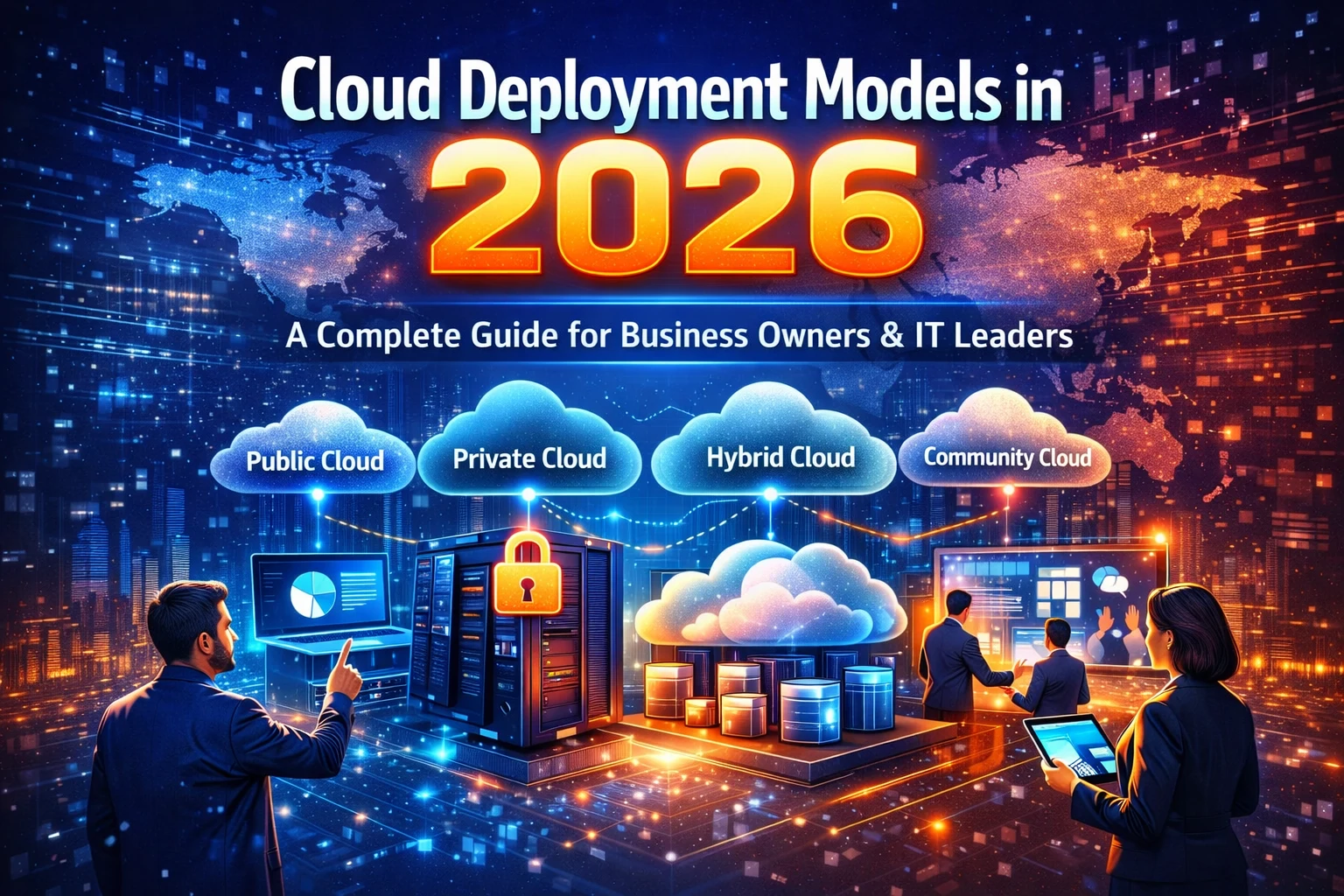
    Understanding Cloud Deployment Models in 2026 is essential for businesses that want to adopt cloud computing efficiently and securely. Cloud deployment models define how cloud infrastructure is hosted, managed, and accessed by organizations. The four primary models include public cloud, private cloud, hybrid cloud, and the community cloud deployment model. Each model offers different advantages depending on business size, security needs, compliance requirements, and scalability goals.

    For many organizations in 2026, the hybrid cloud deployment model has become the most flexible option because it combines the benefits of both private and public cloud environments. Businesses can store sensitive data securely in a private environment while using public cloud services for scalability and cost efficiency.

    When selecting among the types of cloud deployment models, companies must consider factors such as data security, operational cost, IT control, and business growth. By understanding these models and evaluating real-world cloud computing deployment models examples, business owners and IT leaders can make informed decisions that improve performance, security, and digital transformation strategies.

    Ultimately, Cloud Deployment Models in 2026 are helping organizations build scalable, secure, and cost-effective infrastructures that support innovation and long-term growth.

    Introduction

    The way businesses manage technology infrastructure has changed dramatically over the past decade. Traditional on-premise servers are gradually being replaced by cloud environments that provide flexibility, scalability, and remote accessibility. As organizations continue to modernize their operations, understanding Cloud Deployment Models in 2026 has become a key priority for business owners and IT leaders.

    Cloud computing allows companies to store and process data through remote servers instead of maintaining expensive hardware on-site. However, simply adopting cloud technology is not enough. Businesses must choose the right deployment model to ensure efficiency, data protection, and operational flexibility.

    The concept of Cloud Deployment Models in 2026 focuses on how cloud resources are organized, managed, and delivered to organizations. Different businesses have different requirements. Some prioritize cost savings and scalability, while others focus on strict data privacy and regulatory compliance.

    By understanding the types of cloud deployment models, companies can select the approach that aligns best with their goals. This guide will explore each model in detail, provide cloud computing deployment models examples, and help organizations understand when to use models like the hybrid cloud deployment model or the community cloud deployment model.

    What Are Cloud Deployment Models?

    Cloud deployment models define how cloud infrastructure is implemented and who has access to it. They determine where data is stored, how applications are hosted, and who manages the overall environment.

    In simple terms, a deployment model describes the structure of the cloud environment and the level of access provided to users or organizations. It also determines the balance between control, cost, security, and scalability.

    When businesses analyze Cloud Deployment Models in 2026, they typically evaluate the following factors:

    • Ownership of the infrastructure
    • Data security and privacy requirements
    • Accessibility and collaboration needs
    • Operational costs and maintenance responsibilities
    • Regulatory and compliance requirements

    Different companies require different combinations of these factors, which is why several types of cloud deployment models exist today.

    For example, a startup company may choose a public cloud because it offers affordable infrastructure and easy scalability. On the other hand, a financial institution might prefer a private or community cloud deployment model due to strict data security and regulatory standards.

    Why Businesses Are Adopting Cloud Deployment Models in 2026

    The rapid adoption of cloud computing is driven by the need for speed, flexibility, and innovation. Businesses are no longer limited by physical servers or local infrastructure. Instead, cloud solutions allow organizations to operate from anywhere while maintaining high performance and reliability.

    In Cloud Deployment Models in 2026, businesses are adopting cloud strategies for several key reasons.

    First, cloud environments provide excellent scalability. Companies can increase or decrease resources depending on their operational needs without investing heavily in new hardware.

    Second, cloud deployment significantly reduces infrastructure costs. Organizations no longer need to maintain large data centers or expensive IT equipment.

    Third, cloud platforms enable seamless collaboration. Employees can access applications and files from multiple locations, improving productivity and remote work capabilities.

    Fourth, modern cloud systems offer advanced security features such as encryption, automated backups, and disaster recovery mechanisms.

    Finally, cloud adoption allows businesses to focus on innovation rather than infrastructure maintenance. Instead of spending resources on managing servers, companies can invest in product development, customer service, and strategic growth.

    Because of these advantages, Cloud Deployment Models in 2026 have become an essential part of digital transformation strategies across industries.

    Types of Cloud Deployment Models

    There are four major types of cloud deployment models used by organizations worldwide. Each model serves a unique purpose and is designed for different operational needs.

    Understanding these models helps businesses choose the most suitable environment for their applications, data storage, and digital services.

    Public Cloud

    The public cloud is one of the most widely used deployment models. In this model, cloud infrastructure is owned and managed by third-party providers who deliver computing resources over the internet.

    Companies rent storage, processing power, and applications from providers instead of building their own infrastructure.

    Some common cloud computing deployment models examples of public cloud services include hosting websites, running mobile applications, managing development environments, and storing business data.

    Public cloud environments are highly scalable and cost-effective, making them ideal for startups, small businesses, and companies with rapidly changing resource demands.

    However, because the infrastructure is shared among multiple users, organizations must ensure that their data security policies and compliance standards are properly implemented.

    Private Cloud

    A private cloud is built exclusively for one organization. In this model, the infrastructure is either hosted on-site or managed by a third-party provider but dedicated exclusively to one company. 

    This model offers higher levels of control, customization, and security compared to the public cloud.

    Organizations that deal with sensitive information, such as healthcare providers, financial institutions, and government agencies, often rely on private cloud environments.

    In Cloud Deployment Models in 2026, private clouds continue to play a vital role for companies that require strict compliance and data protection policies.

    The downside of private cloud environments is that they usually require higher operational costs because businesses are responsible for maintaining the infrastructure.

    Hybrid Cloud Deployment Model

    The hybrid cloud deployment model combines both public and private cloud environments. It allows businesses to store sensitive data in private infrastructure while using public cloud resources for less critical workloads.

    This model has become increasingly popular in Cloud Deployment Models in 2026 because it offers the best balance between flexibility, security, and cost efficiency.

    For example, a company might keep customer databases in a private cloud while running marketing applications in the public cloud. This approach allows organizations to maintain security while benefiting from the scalability of public cloud services.

    The hybrid approach is especially beneficial for companies that want to modernize gradually without completely replacing their existing infrastructure.

    Community Cloud Deployment Model

    The community cloud deployment model is designed for organizations that share similar goals, security requirements, or regulatory standards.

    In this model, multiple organizations share a cloud infrastructure that is specifically designed to meet their collective needs.

    For instance, several hospitals may use a community cloud to store patient data while complying with healthcare regulations. Similarly, government agencies may share a community cloud environment to manage public services securely.

    The community cloud deployment model provides a balance between cost efficiency and data security, making it ideal for industries that require collaboration and regulatory compliance.

    Cloud Computing Deployment Models Examples

    To better understand how these models work, let’s look at some practical cloud computing deployment models examples used by modern organizations.

    A technology startup launching a mobile application may use a public cloud platform to host its servers and databases. This approach allows the company to scale quickly as user demand grows.

    A multinational bank may rely on a private cloud environment to store financial records and maintain strict security standards.

    An e-commerce company might implement the hybrid cloud deployment model to manage customer transactions securely while running its website and analytics tools on the public cloud.

    Universities or research institutions may collaborate through a community cloud deployment model to share research data and computing resources.

    These examples demonstrate how businesses choose different cloud deployment strategies depending on their specific needs and operational priorities.

    How to Select the Right Cloud Deployment Model

    Selecting the right cloud strategy is not simply a technical decision. It is a strategic choice that affects cost management, security policies, and business scalability.

    When evaluating Cloud Deployment Models in 2026, business owners and IT leaders should consider several important factors.

    First, data security is a major concern. Companies dealing with sensitive customer information may prefer private or hybrid environments.

    Second, budget constraints can influence the decision. Public cloud environments are typically more affordable for startups and small businesses.

    Third, regulatory compliance requirements must be carefully evaluated, especially in industries such as healthcare, finance, and government services.

    Fourth, scalability needs play an important role. Businesses expecting rapid growth may benefit from the flexibility offered by hybrid or public cloud models.

    Finally, IT management capabilities should also be considered. Some organizations prefer cloud environments that reduce the burden on internal IT teams.

    By carefully analyzing these factors, companies can determine which of the types of cloud deployment models best supports their operational goals.

    Future Trends in Cloud Deployment Models in 2026

    As technology continues to evolve, Cloud Deployment Models in 2026 are also undergoing significant transformation.

    One major trend is the rise of multi-cloud strategies, where organizations use multiple cloud providers to avoid dependency on a single platform.

    Another trend is the integration of artificial intelligence and automation into cloud management systems. AI-driven monitoring tools can automatically optimize resources, detect security threats, and improve system performance.

    Cybersecurity is also becoming a central focus. Cloud providers are investing heavily in advanced encryption, threat detection, and identity management technologies to protect business data.

    Industry-specific cloud solutions are also gaining popularity. Many providers now offer specialized cloud environments designed for healthcare, finance, education, and manufacturing sectors.

    These innovations are shaping the future of Cloud Deployment Models in 2026, making cloud infrastructure more intelligent, secure, and adaptable to modern business needs.

    Conclusion

    As organizations continue their digital transformation journey, understanding Cloud Deployment Models in 2026 is more important than ever. The way a business deploys its cloud infrastructure directly affects performance, security, scalability, and operational efficiency.

    From public cloud environments that offer cost-effective scalability to private infrastructures that provide strict security control, each model serves a specific purpose. The hybrid cloud deployment model offers flexibility by combining multiple environments, while the community cloud deployment model supports collaboration among organizations with shared requirements.

    By carefully evaluating the types of cloud deployment models and analyzing real-world cloud computing deployment models examples, business owners and IT leaders can choose the strategy that aligns best with their technological and business goals.

    Ultimately, Cloud Deployment Models in 2026 are not just about technology. They represent a strategic foundation that helps businesses innovate, scale, and compete effectively in an increasingly digital economy.


    Frequently Asked Questions

    How do I choose a cloud deployment model?

    Choosing the right cloud deployment model depends on your business requirements, security needs, and budget. When evaluating Cloud Deployment Models in 2026, organizations should consider factors such as data sensitivity, regulatory compliance, scalability, and operational costs. For example, startups often prefer public cloud environments because they are affordable and easy to scale, while enterprises handling sensitive data may choose private or hybrid environments. Among the types of cloud deployment models, many businesses now adopt the hybrid cloud deployment model because it provides a balance between security, flexibility, and cost efficiency.

    Which cloud deployment model is most commonly used?

    The most commonly used model today is the public cloud. Many companies rely on public cloud services because they provide scalable infrastructure without requiring heavy investments in physical servers. In Cloud Deployment Models in 2026, public cloud platforms are widely adopted by startups, digital businesses, and growing enterprises that need flexible computing resources. These environments allow organizations to run applications, host websites, and store data with minimal infrastructure management.

    Which cloud deployment model is cheapest?

    The public cloud is generally considered the most cost-effective option. Businesses pay only for the resources they use, which eliminates the need for expensive hardware and maintenance. In most cloud computing deployment models examples, startups and small businesses choose public cloud environments because they offer affordable pricing and rapid scalability. This makes it easier for companies to launch digital services without investing heavily in IT infrastructure.

    Which deployment model provides the highest level of security?

    The private cloud is typically considered the most secure deployment model because it is dedicated to a single organization. This allows businesses to maintain complete control over their infrastructure, security policies, and data management systems. However, in Cloud Deployment Models in 2026, many enterprises are also implementing the hybrid cloud deployment model to combine the security of private environments with the scalability of public cloud resources.

    What is the most popular cloud service model?

    Among cloud service models, Software as a Service (SaaS) is the most popular. SaaS applications allow businesses to access software through the internet without installing or managing systems locally. In modern Cloud Deployment Models in 2026, SaaS platforms are widely used for tools such as customer relationship management, project management, collaboration software, and business analytics, making them a core part of cloud-based business operations.

  • Benefits of Software Testing in 2026: How It Saves Cost, Time, and Reputation

    Benefits of Software Testing in 2026: How It Saves Cost, Time, and Reputation

    Benefits of Software Testing in 2026

    Quick Summary

    The Benefits of Software Testing in 2026 are critical for businesses aiming to deliver reliable, secure, and high-performing digital products. Software testing helps organizations reduce development and maintenance costs, accelerate release cycles, and protect brand reputation in a highly competitive market. By identifying faults early, preventing failures in production, and ensuring consistent user experiences, software testing has evolved into a strategic necessity rather than a technical afterthought.

    Quick Answers for Users:
    Software testing in 2026 saves money by detecting issues early, saves time by reducing rework and release delays, and safeguards reputation by preventing system crashes, data breaches, and user dissatisfaction.


    Introduction: Why the Benefits of Software Testing in 2026 Are Business-Critical

    The Benefits of Software Testing in 2026 extend far beyond finding bugs or validating features. In today’s digital-first economy, software applications are the backbone of business operations, customer engagement, and revenue generation. From mobile apps and enterprise platforms to cloud-based systems and AI-driven tools, software failures can instantly disrupt services and damage trust.

    In 2026, users expect applications to be fast, secure, and always available. Even a brief outage or minor glitch can lead to lost customers, negative reviews, and long-term reputational harm. This is why software testing has become an essential pillar of modern development strategies, especially for companies delivering solutions at scale or competing in global markets.


    The Importance of Software Testing in a Hyper-Connected Digital World

    The Importance of Software Testing has grown significantly as software ecosystems become more complex and interconnected. Modern applications rarely function in isolation. They integrate with third-party APIs, cloud services, payment gateways, and multiple devices, all of which increase the risk of unexpected behavior.

    Software testing ensures that each component works correctly on its own and within the larger system. It validates functionality, performance, usability, and security before real users interact with the product. In 2026, testing is no longer limited to quality assurance teams; it is embedded throughout the development lifecycle, influencing design decisions, architecture planning, and release strategies.

    Without consistent testing, businesses face higher operational risks, unstable systems, and declining user confidence.


    How Software Testing Saves Cost in 2026

    One of the most measurable benefits of software testing is cost efficiency. Fixing a defect during the design or development stage costs significantly less than resolving the same issue after deployment. In production environments, failures often require emergency fixes, customer support involvement, compensation, and sometimes legal action.

    In 2026, software systems handle sensitive data, financial transactions, and mission-critical operations. A single untested feature can lead to cascading failures across multiple services. Software testing minimizes these risks by identifying faults early, when they are easier and cheaper to resolve.

    Additionally, testing reduces long-term maintenance costs. Well-tested software is more stable, easier to update, and less prone to recurring issues. Over time, this results in predictable budgets, fewer emergency interventions, and improved return on investment.


    Saving Time Through a Reliable Software Testing Process

    There is a common misconception that testing slows down development. In reality, a well-implemented Software Testing Process saves time by preventing repeated rework and release delays. In 2026, development teams operate in fast-paced agile and DevOps environments where speed and quality must coexist.

    Continuous testing allows teams to detect issues as soon as new code is introduced. Instead of waiting until the end of development, testing runs alongside coding, providing immediate feedback. This approach reduces bottlenecks, accelerates decision-making, and ensures smoother releases.

    By minimizing unexpected failures near launch dates, software testing helps teams meet deadlines with confidence and deliver updates faster without compromising stability.


    Protecting Business Reputation Through Software Testing

    Reputation is one of the most valuable assets a business can have in 2026. Customers judge brands based on their digital experiences, and software failures often make headlines faster than successes. The Benefits of Software Testing in 2026 include protecting brand credibility by ensuring consistent and reliable performance.

    When applications crash, load slowly, or expose user data, trust erodes instantly. Users rarely differentiate between a technical error and a business decision—they simply move on to competitors. Software testing acts as a safeguard against such scenarios by validating real-world usage conditions before public release.

    Through performance testing, security testing, and usability testing, organizations can ensure their software meets expectations under pressure, preserving customer loyalty and brand integrity.


    Understanding the Difference Between a Fault and a Failure

    A common question in quality assurance is the difference between a fault and a failure? Understanding this distinction highlights the true value of testing.

    A fault is an underlying defect in the code or logic that may exist without immediate consequences. A failure occurs when that fault is triggered during execution and causes incorrect system behavior. Many failures that users experience originate from faults that were never detected during development.

    Software testing focuses on identifying faults before they evolve into visible failures. By simulating real usage scenarios, testing uncovers hidden defects that might otherwise remain dormant until deployment, when the cost and impact are much higher.


    Some Key Issues in Software Testing in 2026

    Despite technological advancements, some key issues in software testing continue to challenge development teams. Increasing system complexity, tight release schedules, and rapidly evolving technologies make comprehensive testing difficult.

    In 2026, applications must perform consistently across devices, operating systems, and network conditions. Managing test coverage while maintaining speed is a persistent challenge. However, modern testing strategies that combine automation, exploratory testing, and risk-based approaches help teams address these issues effectively.

    By prioritizing critical functionalities and continuously refining test strategies, organizations can overcome testing limitations without slowing innovation.


    The Software Testing Process That Delivers Reliable Results

    A structured Software Testing Process provides clarity and consistency across projects. It begins with understanding requirements and identifying potential risk areas. Test planning follows, defining scope, tools, and success criteria. Test case design translates requirements into actionable scenarios, while execution validates system behavior under controlled conditions.

    Defect tracking ensures issues are documented, prioritized, and resolved efficiently. Finally, test closure evaluates outcomes and lessons learned, improving future testing cycles. In 2026, this process is increasingly supported by automation and analytics, enabling smarter decision-making and continuous improvement.


    Role of Software Engineering in Kolkata in Advancing Testing Standards

    The growth of software engineering in Kolkata has contributed significantly to the adoption of modern software testing practices. Development teams in the region serve global clients who demand high-quality, scalable, and secure applications.

    To meet international standards, testing is integrated into every stage of development. This focus on quality allows companies to deliver competitive solutions while maintaining cost efficiency and reliability. As global demand for robust software continues to rise, testing remains a defining strength of modern software engineering practices.


    Long-Term Business Value of Software Testing

    Beyond immediate cost and time savings, the long-term benefits of software testing include improved scalability, smoother upgrades, and better customer retention. Well-tested systems adapt more easily to new features, regulatory changes, and market demands.

    In 2026, businesses that prioritize testing gain a competitive edge by delivering dependable digital experiences. Testing transforms software from a potential liability into a strategic asset that supports growth, innovation, and customer satisfaction.


    Conclusion: Why the Benefits of Software Testing in 2026 Cannot Be Ignored

    The Benefits of Software Testing in 2026 clearly demonstrate that quality assurance is no longer optional. Software testing saves cost by preventing expensive post-release fixes, saves time by reducing rework and delays, and protects reputation by ensuring reliable and secure user experiences.

    As digital expectations continue to rise, businesses that invest in comprehensive testing strategies will outperform those that treat testing as an afterthought. In 2026 and beyond, software testing is not just about finding errors—it is about building trust, resilience, and long-term success.

    Frequently Asked Questions

    What is meant by software testing?

    Software testing is the process of evaluating a software application to verify that it works as intended, meets user requirements, and is free from critical defects. It involves checking functionality, performance, security, and usability to ensure the software delivers a reliable and error-free experience. In 2026, software testing also focuses on preventing failures, improving user trust, and protecting business reputation before products reach real users.


    What are the five software testing methods?

    The five most commonly used software testing methods focus on how testing is performed and what level of system knowledge is required. These include black box testing, where functionality is tested without looking at the code; white box testing, which examines internal logic and code structure; grey box testing, a combination of both approaches; manual testing, where testers execute test cases without automation; and automated testing, which uses tools and scripts to run tests faster and repeatedly. Together, these methods help ensure comprehensive test coverage.


    What are the 7 steps of software testing?

    The software testing lifecycle typically follows seven structured steps. It starts with requirement analysis to understand what needs to be tested, followed by test planning where scope, tools, and resources are defined. Test case design comes next, converting requirements into test scenarios. The testing environment is then set up, after which test execution begins. Defects are logged and tracked, and finally, test closure evaluates test results and documents lessons learned for future improvements.


    Will testers be replaced by AI?

    No, testers will not be replaced by AI, but their roles are evolving. In 2026, AI helps automate repetitive tasks, generate test cases, and predict high-risk areas, making testing faster and smarter. However, human testers remain essential for exploratory testing, usability evaluation, business logic validation, and ethical decision-making. AI enhances testers’ productivity, but human judgment and creativity cannot be fully replaced.


    Is coding dead due to AI?

    Coding is not dead due to AI; it has transformed. AI tools assist developers by generating code snippets, identifying errors, and accelerating development, but they still rely on human input. In 2026, developers are more focused on problem-solving, system design, and logic rather than writing every line manually. Coding remains a core skill, while AI acts as a powerful assistant rather than a replacement.


  • Custom Software Development Process in 2026: What Clients Should Know First

    Custom Software Development Process in 2026: What Clients Should Know First

    Custom Software Development Process in 2026

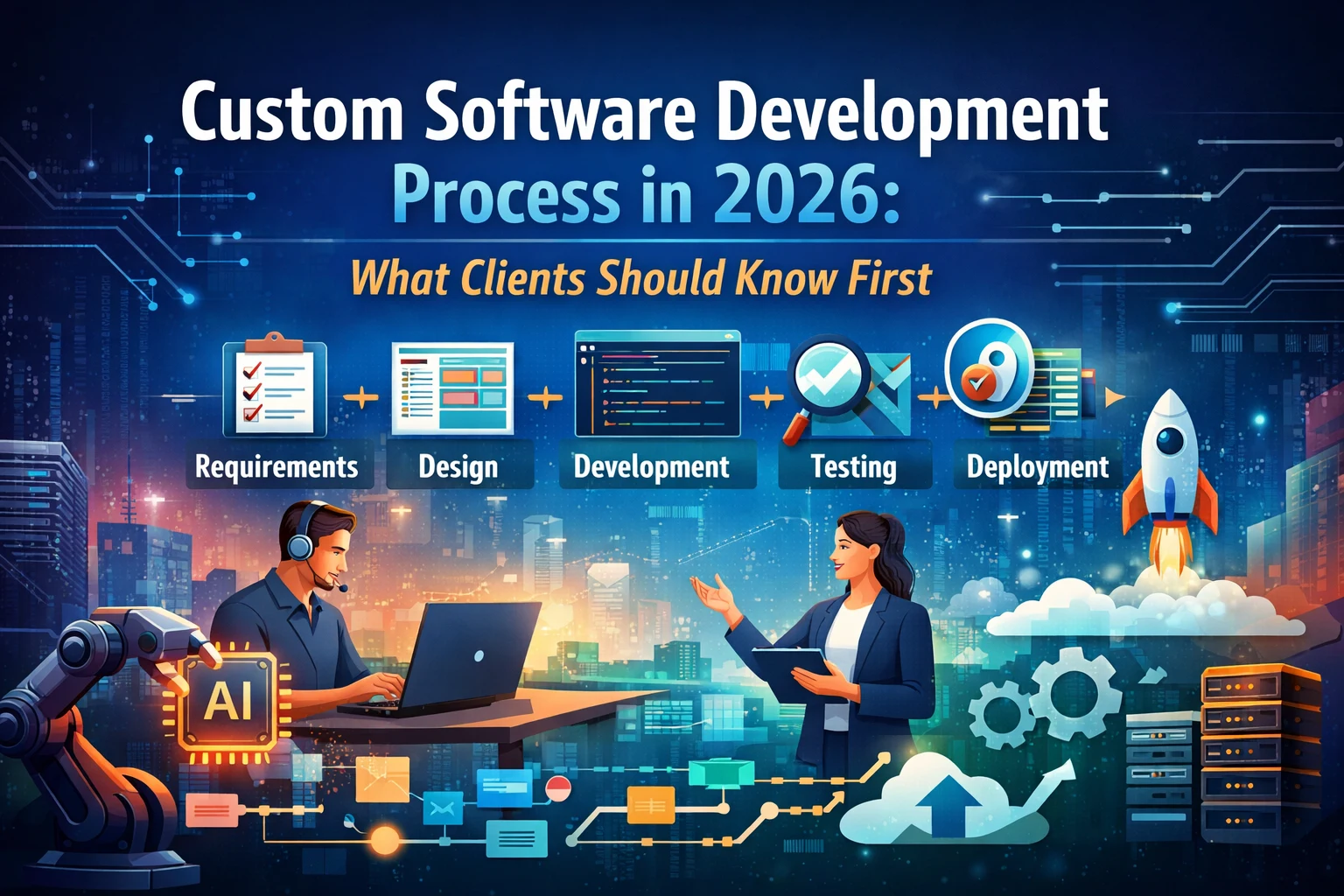
    The custom software development process in 2026 has transformed dramatically from traditional models. Businesses now demand software that not only solves immediate problems but also supports long-term strategic goals. For clients considering custom software development in Kolkata, understanding this process is critical before making any investment.

    Modern clients are more informed and selective. They want solutions that are scalable, secure, maintainable, and aligned with business objectives. By understanding the customized process for software development, clients can actively contribute to shaping a product that truly reflects their vision while avoiding common pitfalls that lead to delays, budget overruns, or technical debt.

    Whether your project involves mobile application development in Kolkata, IoT solutions, or enterprise software, a deep understanding of the process helps clients ask the right questions, evaluate potential partners, and make smarter, long-term decisions.


    Why Clients Should Understand the Custom Software Development Process

    Understanding the custom software development process in 2026 is more than just “technical knowledge”—it’s about strategic empowerment. Clients who know the process can:

    • Communicate effectively with developers: When you understand phases, you can articulate your expectations, provide timely feedback, and reduce misunderstandings.

    • Anticipate timelines and budgets: Awareness of stages, dependencies, and testing cycles helps clients realistically plan and allocate resources.

    • Identify risks early: Knowledge of potential bottlenecks or integration challenges enables proactive mitigation.

    • Evaluate quality and expertise: Understanding the process allows clients to assess a team’s competence, whether it’s in mobile application development in Kolkata or complex IoT systems.

    Insightful clients also appreciate that modern development is iterative, not linear. Each stage builds on the previous, allowing flexibility for feedback, which is especially important in projects with evolving requirements.


    Key Stages of the Custom Software Development Process

    The custom software development process in 2026 consists of several critical stages. A client-centric understanding of each stage ensures a smoother experience and better alignment with business goals.

    Requirement Gathering & Analysis

    Requirement gathering is the foundation of success. A thorough process ensures developers understand business goals, user expectations, and technical constraints.

    Clients should actively participate in:

    • Business goal clarification: Defining objectives beyond immediate needs, considering long-term scalability.

    • Functional requirement detailing: Outlining core functionalities, integration needs, and desired performance.

    • Non-functional requirements: Performance, security, compliance, and usability metrics.

    Insight: Many clients underestimate non-functional requirements. For example, in custom software development in Kolkata, a small oversight in security or scalability requirements can lead to costly rewrites later. Engaging early and reviewing detailed requirement documents prevents surprises and ensures alignment.

    Design & Prototyping

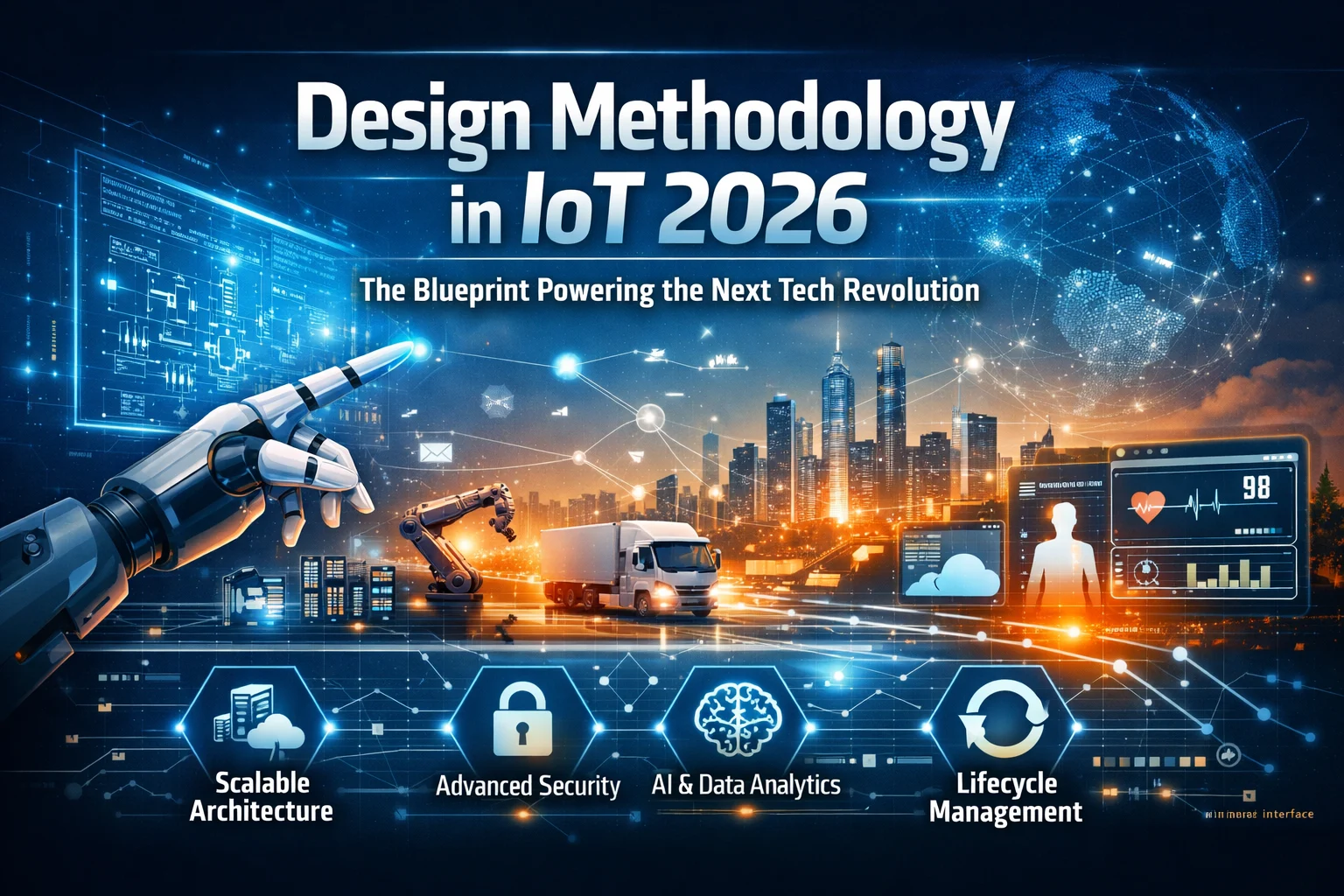
    Design marks the point at which abstract ideas start taking a concrete form. Using design methodology in IoT or mobile-first principles, development teams create wireframes, mockups, and interactive prototypes.

    Key benefits of prototyping include:

    • Early visualization: Clients see the product’s look, feel, and functionality before development begins.

    • Feedback loops: Quick iterations ensure client expectations are met without significant resource wastage.

    • Risk reduction: Design flaws are identified early, avoiding delays and extra costs.

    Insight: Prototyping is especially critical for IoT projects where device interaction and mobile application development in Kolkata integration can have complex dependencies. Clients who actively review prototypes often end up with a product that feels intuitive and user-friendly from day one.


    Development & Implementation

    Development transforms design into working software. Agile and iterative approaches dominate modern custom software development process in 2026, allowing for faster feedback and flexible adaptation to changes.

    Clients should be aware that development includes:

    • Backend logic creation: Building the core architecture that supports all functionalities.

    • Frontend development: Creating interfaces for end-users, particularly in mobile applications.

    • Integration with third-party systems or IoT frameworks: Ensuring seamless interoperability.

    • Code reviews and quality checks: Maintaining maintainability, scalability, and security.

    Insight: Active client involvement, such as reviewing intermediate builds or testing features in a sandbox environment, improves alignment. For instance, in mobile application development in Kolkata, early client feedback on UI/UX reduces costly iterations later.


    Testing & Quality Assurance

    Testing is no longer just about finding bugs. It ensures software reliability, security, and performance.

    • Key Testing Areas Include:

      • Functional correctness to meet requirements

      • Security audits for data protection

      • Performance under various load conditions

      • Cross-platform and device compatibility

    Insight: Clients who understand testing stages can request additional checks relevant to their business. For example, e-commerce clients may require stress tests to simulate heavy user traffic, while IoT projects need connectivity and security testing. Awareness of these testing nuances ensures clients receive software that is both robust and reliable.


    Deployment & Maintenance

    Deployment is only the beginning. Successful software requires maintenance in custom software development process for long-term efficiency.

    • Maintenance Includes:

      • Regular updates for features and security

      • Performance optimization

      • Scalability adjustments

      • Bug resolution

    Insight: Clients often underestimate post-launch care. A software solution without proper maintenance risks downtime, vulnerabilities, and user dissatisfaction. Discussing SLAs, update schedules, and monitoring tools ensures the software evolves with business needs and remains competitive.


    Why a Customized Process Matters

    A customized process for software development is critical because one-size-fits-all approaches rarely meet unique business needs.

    Benefits of a customized process include:

    • Tailored architecture suited to specific business requirements

    • Integration with existing enterprise systems

    • Enhanced user experience and workflow optimization

    • Flexibility for scaling as the business grows

    Insight: Clients who understand customization can ask meaningful questions about frameworks, architecture, and integration capabilities. This ensures they are not left with a generic solution that cannot adapt to future business needs.


    Design Methodology in IoT

    IoT solutions demand a structured approach. A strong design methodology in IoT ensures:

    • Devices and software communicate seamlessly

    • Interfaces are intuitive and accessible

    • Security protocols protect sensitive data

    • Systems remain scalable for growing device networks

    Insight: Clients should evaluate development teams’ methodology for IoT projects. Teams that emphasize robust design frameworks often deliver solutions that are reliable, secure, and future-ready. Understanding the methodology allows clients to anticipate challenges and plan for device integration, monitoring, and analytics.


    Mobile Application Development Considerations

    For businesses targeting mobile users, mobile application development in Kolkata has become a strategic priority. Clients should consider:

    • Platform choice: Native iOS/Android or cross-platform frameworks

    • Intuitive UI/UX design for higher engagement

    • Backend integration with databases and existing software

    • Post-launch support and updates

    Insight: Active involvement in reviewing app prototypes ensures functionality aligns with user expectations. Clients familiar with the mobile development lifecycle often achieve faster adoption and reduced support issues.


    Evaluating a Development Partner

    Choosing the right development partner is crucial. Clients should assess:

    • Proven experience in custom software development in Kolkata

    • Transparency about their customized process for software development

    • Technical expertise in IoT, web, and mobile applications

    • Maintenance and support capabilities

    • Positive client testimonials and case studies

    Insight: A knowledgeable client can gauge the team’s capability to handle complex requirements. Asking specific questions about design, testing, and AI integration ensures the project is in capable hands.


    AI and Automation in 2026 Development

    AI is redefining software development. Clients should understand its applications in the custom software development process in 2026:

    • Automated testing to detect bugs faster

    • Predictive maintenance to prevent system failures

    • Data-driven insights for feature optimization

    • AI-assisted coding to accelerate development

    Insight: Clients who leverage AI awareness can request smarter solutions, reduce manual errors, and ensure faster delivery timelines. AI also allows for continuous improvement post-launch, enhancing user experience and operational efficiency.


    Conclusion: What Clients Should Take Away

    Understanding the custom software development process in 2026 empowers clients to make informed decisions and select the right development partner. By familiarizing themselves with:

    • Requirement gathering, design, and prototyping

    • Development, testing, and deployment

    • Design methodology in IoT and mobile application development in Kolkata

    • Maintenance in custom software development process

    • Tailored approaches in customized process for software development

    …clients can confidently invest in software that meets their immediate needs and adapts to future business challenges.

    Knowledge is power in 2026. Clients who understand the process ensure software is scalable, secure, and high-performing while reducing risks and maximizing ROI.

    Frequently Asked Questions

    1. What is Custom Software Development?

    Custom software development is the process of designing, creating, deploying, and maintaining software that is tailored specifically to meet the unique requirements of a business or organization. Unlike off-the-shelf software, custom software is built to solve specific problems, support unique business processes, and scale as the organization grows.

    Key points:

    • Developed for specific users or organizations

    • Focuses on business goals and workflows

    • Flexible, scalable, and maintainable over time

    • Can integrate with existing systems or IoT devices

    • Often used for enterprise applications, mobile apps, or specialized software solutions

    Example: A logistics company in Kolkata may need a custom tracking system that integrates GPS, warehouse management, and delivery scheduling. Off-the-shelf software may not fit all its operational needs, so custom software development is preferred.


    2. What are the seven key steps involved in building software from concept to deployment?

    The software development process typically follows 7 main stages, ensuring quality and alignment with client goals:

    1. Requirement Analysis – Gathering and analyzing business needs, functional and non-functional requirements.

    2. Feasibility Study – Evaluating technical, operational, and financial feasibility.

    3. System Design – Creating software architecture, UI/UX design, and database structure.

    4. Implementation (Coding/Development) – Writing code and integrating systems according to design specifications.

    5. Testing – Conducting functional, security, performance, and usability testing.

    6. Deployment – Launching the software for end-users or production environment.

    7. Maintenance & Support – Updating features, fixing bugs, and scaling the system over time.

    Insight: In 2026, agile and iterative methods often combine these stages, allowing incremental delivery and faster feedback loops.


    3. What are the 5 Phases of SDL (Software Development Life)

    SDL generally refers to Software Development Lifecycle (SDLC) phases. Sometimes SDL is used interchangeably with SDLC but in a condensed 5-phase model:

    1. Planning – Defining objectives, resources, and project roadmap.

    2. Analysis – Gathering detailed requirements and understanding business needs.

    3. Design – Creating architecture, UI/UX, database schemas, and system models.

    4. Implementation – Coding, integration, and unit testing of modules.

    5. Testing and maintenance include thorough quality checks, deploying the software, and performing regular updates to keep it running smoothly.

    Note: These 5 phases are essentially a simplified version of the 7-stage process, often used in agile or iterative approaches.


    4. What is the Difference Between SDL and SDLC?

    • SDL (Software Development Life): Often a conceptual framework focused on the lifecycle of software from planning to maintenance. It may emphasize stages broadly without strict documentation.

    • SDLC (Software Development Life Cycle): A structured methodology that defines detailed steps, processes, and standards for software development. SDLC is formalized and usually includes models like Waterfall, Agile, Spiral, or DevOps.

    In short:

    • SDL = Conceptual lifecycle of software

    • SDLC = Structured, documented methodology to develop software


    5. What is L1, L2, L3, and L4 in Software Development?

    L1–L4 usually refer to support or escalation levels in IT and software development. They indicate levels of problem-solving and technical support:

    1. L1 (Level 1 Support) – Basic support or first point of contact. Handles simple issues, general queries, and basic troubleshooting.

    2. L2 (Level 2 Support) – More specialized support. Handles issues requiring deeper technical knowledge or software configuration expertise.

    3. L3 (Level 3 Support) – Expert-level support, usually involving developers or architects. Handles complex issues, bugs, or source code-related problems.

    4. L4 (Level 4 Support) – External or vendor-level support. Involves third-party software providers or specialized experts when internal teams cannot resolve the issue.

    Example: If a company’s custom software crashes:

    • L1 may restart the system or check basic configurations

    • L2 may debug code modules

    • L3 may fix complex bugs in source code

    • L4 may involve a third-party vendor if a framework or library causes the issue


  • Mobile Application Development in Kolkata: Stop Losing Customers to Big Brands

    Mobile Application Development in Kolkata: Stop Losing Customers to Big Brands

    Mobile application development in kolkata

    If you are a small or mid-sized business owner, there is a quiet fear you may not always say out loud. You work hard every day, you know your customers personally, yet somehow they are slowly drifting toward bigger brands. They have better apps, smoother digital experiences, and a stronger presence on mobile phones. This is exactly where Mobile Application Development in Kolkata becomes more than just a technology decision—it becomes a survival strategy.

    In 2026, customers don’t compare businesses only by price or location. They compare convenience, speed, and experience. Big brands win not because they are smarter, but because they are more accessible. Without a mobile app, your business is invisible in the one place customers spend most of their time: their smartphones. That is why investing in Mobile Application Development in Kolkata is no longer optional for SMBs that want to grow, compete, and stay relevant.

    Why Mobile Application Development in Kolkata Matters More Than Ever for SMBs

    Kolkata has always been a city of entrepreneurs, family-run businesses, and growing startups. But the market has changed. Customers now expect instant access, seamless ordering, quick support, and personalized offers. When they don’t get it from you, they get it from a brand that already has a mobile app.

    Mobile Application Development in Kolkata gives local businesses the power to compete on the same digital ground as national and global brands. A mobile app allows you to stay connected with your customers even when they are not actively searching for you. Push notifications, app-exclusive offers, loyalty programs, and faster service all help you stay top of mind.

    The biggest mistake SMB owners make is thinking mobile apps are only for large enterprises. In reality, modern Mobile App Development Services are designed to be scalable, cost-effective, and customized specifically for small and medium businesses. With the right App Development Company, you don’t need a massive budget—you need the right strategy.

    The Emotional Cost of Not Having a Mobile App

    Every customer you lose to a big brand is not just lost revenue; it is a lost relationship. Many SMB owners feel frustrated because they know their service is better, their products are more personal, and their commitment is stronger. Yet, customers choose brands that are easier to use.

    This emotional gap is exactly what Mobile Application Development in Kolkata helps bridge. A well-designed app puts your business in your customer’s pocket. It tells them you are modern, reliable, and ready for the future. When customers see your app alongside well-known brands on their phone, your credibility instantly rises.

    Working with experienced mobile app developers in Kolkata ensures that your app reflects your brand’s personality while delivering the performance users expect in 2026.

    Choosing the Right App Development Company in Kolkata

    The success of your mobile app depends largely on who builds it. A professional App Development Company understands not just coding, but business goals, customer behavior, and long-term growth. The Best Mobile App Development Company in Kolkata doesn’t sell you features you don’t need; they build solutions that solve real business problems.

    Top agencies focus on user experience, performance, security, and scalability. They study your customers, understand your industry, and recommend the right platform—whether native or hybrid. This is why many SMBs prefer working with the Top Mobile App Development Company in Kolkata, as they bring both technical expertise and strategic insight.

    When evaluating the best app development companies in Kolkata, look for partners who talk about outcomes, not just technology. Your app should increase customer retention, improve engagement, and simplify operations.

    Android, iOS, and Beyond: Platform Choices That Shape Your Growth

    In Kolkata and across India, Android dominates the market, which makes working with an Expert Android App Development Company in Kolkata a smart move for many SMBs. Android apps allow you to reach a wider audience and offer flexible customization options.

    At the same time, premium customers often prefer iOS. A skilled iOS Mobile App Developer ensures your brand delivers a polished, high-performance experience for Apple users. For businesses targeting professionals or international customers, iOS apps play a critical role in brand perception.

    Some businesses still require legacy or enterprise-focused solutions, where a Windows Mobile App Developer may be relevant. While less common, these solutions are still valuable in specific industries.

    For SMBs looking to reduce costs without compromising reach, Hybrid App Development has emerged as a powerful option. With frameworks like Flutter, a skilled Flutter APP Developer can build apps that run smoothly across Android and iOS using a single codebase. This approach is especially effective for startups and growing businesses in 2026.

    How Mobile Application Development in Kolkata Helps You Compete with Big Brands

    Big brands rely on technology to scale, automate, and retain customers. With Mobile Application Development in Kolkata, SMBs can now do the same without massive infrastructure. A mobile app helps you automate bookings, orders, payments, and customer support, freeing up time and resources.

    Push notifications allow you to communicate instantly with your customers. Personalized offers make them feel valued. Loyalty programs reward repeat business. These features are not luxuries anymore—they are expectations.

    A leading android app development company in Kolkata understands how to integrate these features seamlessly, ensuring your app is fast, secure, and easy to use. When your app delivers a smooth experience, customers stop comparing you to big brands and start choosing you for convenience and trust.

    The Role of Mobile App Developers in Kolkata in Long-Term Business Growth

    A mobile app is not a one-time project; it is a long-term asset. Professional mobile app developers in Kolkata focus on scalability, ensuring your app grows as your business grows. They plan for future updates, new features, and evolving customer needs.

    In 2026, businesses that succeed are those that adapt quickly. Your app should be ready to integrate with new payment systems, marketing tools, and analytics platforms. This is why choosing the Best Mobile App Development Company in Kolkata is a strategic decision, not just a technical one.

    Experienced developers also ensure your app complies with security standards and data protection laws, building trust with your users from day one.

    Mobile Application Development Kolkata in 2026: What SMBs Must Prepare For

    The future of Mobile Application Development Kolkata in 2026 is focused on personalization, speed, and intelligence. Customers expect apps that remember their preferences, respond instantly, and feel intuitive. AI-driven recommendations, voice search integration, and advanced analytics are becoming standard features.

    SMBs that invest early in modern Mobile App Development Services position themselves ahead of competitors who are still relying only on websites or social media. A mobile app gives you direct access to customer data, allowing you to make smarter business decisions.

    The Top Mobile App Development Company in Kolkata stays ahead of these trends and ensures your app is future-ready. They don’t just build apps; they build digital ecosystems that support long-term success.

    Why Now Is the Right Time to Act

    Waiting is the biggest risk. Every month without an app is another month where customers form habits around competitor brands. Mobile Application Development in Kolkata allows you to take control of your customer relationships and build a direct communication channel.

    SMB owners who act now benefit from lower competition, better customer loyalty, and stronger brand recognition. With flexible development models, hybrid solutions, and experienced developers available locally, there has never been a better time to invest.

    Conclusion: Mobile Application Development in Kolkata Is Your Competitive Edge

    Losing customers to big brands is not a reflection of your quality—it is a reflection of accessibility. In today’s mobile-first world, Mobile Application Development in Kolkata is the bridge between your hard work and your customer’s convenience.

    By partnering with the Best Mobile App Development Company in Kolkata, working with skilled mobile app developers in Kolkata, and choosing the right technologies—from Android and iOS to Flutter and hybrid solutions—you give your business the tools it needs to compete confidently.

    In 2026 and beyond, customers will choose businesses that are easy to reach, simple to use, and always available. A mobile app makes that possible. If you want to stop losing customers to big brands and start building lasting relationships, Mobile Application Development in Kolkata is not just the right choice—it is the necessary one.

    Frequently Asked Questions

    What features are essential in a mobile app for small businesses in 2026?

    In 2026, a mobile app must do more than just look good. For small businesses, the most essential features are those that reduce friction and increase daily usage. A fast and intuitive user interface is critical because customers expect instant responses. Secure login options, seamless payment integration, real-time notifications, and personalized content are now baseline expectations. Modern Mobile Application Development in Kolkata also focuses heavily on analytics, allowing business owners to understand customer behavior and improve services continuously. When built by experienced mobile app developers in Kolkata, these features work together to create an app that customers actually enjoy using, not just downloading.


    How do I choose the right mobile app developers in Kolkata?

    Choosing the right development partner is one of the most important decisions you’ll make. The best approach is to look beyond pricing and focus on understanding. Reliable mobile app developers in Kolkata take time to understand your business goals, target audience, and long-term plans. A strong portfolio, clear communication, and experience across platforms are key indicators. Many SMBs prefer working with the Best Mobile App Development Company in Kolkata because they combine technical expertise with business strategy, ensuring the app supports growth rather than just fulfilling a technical requirement.


    What is the difference between native app development and hybrid app development?

    Native app development means building separate apps for Android and iOS using platform-specific technologies. This approach offers high performance and deep device integration, making it ideal for feature-rich or performance-critical applications. On the other hand, Hybrid App Development uses a single codebase to create apps that run on multiple platforms, often reducing cost and development time. In Mobile Application Development in Kolkata, many SMBs choose hybrid solutions with frameworks like Flutter because they balance performance with affordability. The right choice depends on your business goals, target audience, and scalability needs.


    Can a mobile app really help increase customer retention and repeat sales?

    Yes, and this is where mobile apps truly outperform websites. A mobile app creates a direct communication channel between your business and your customers. Through push notifications, loyalty rewards, and personalized offers, you stay connected even when customers are not actively searching for you. Well-planned Mobile App Development Services help businesses turn one-time buyers into repeat customers by making engagement effortless. This is why many companies working with a trusted App Development Company see measurable improvements in customer retention and lifetime value.


    How can mobile application development in Kolkata help me compete with big brands?

    Big brands win on convenience, not just scale. Mobile Application Development in Kolkata empowers small businesses to offer the same level of accessibility and professionalism. A well-designed app allows you to provide faster service, personalized experiences, and consistent brand presence—advantages that customers value deeply. When developed by the Top Mobile App Development Company in Kolkata, your app can integrate smart features that level the playing field, helping you build trust, loyalty, and long-term relationships. Instead of losing customers to big brands, you start competing with them on experience.


  • Latest Technology in Software Development 2026: Are You Ready for What’s Coming?

    Latest Technology in Software Development 2026: Are You Ready for What’s Coming?

    Latest Technology in Software Development 2026

    The Latest Technology in Software Development 2026 represents a structural transformation rather than incremental upgrades in coding practices. In 2026, software innovation is being measured through business impact metrics such as deployment velocity, operational resilience, infrastructure elasticity, security maturity scores, and long-term scalability ratios. Organizations are no longer adopting technology for experimentation; they are adopting it for measurable competitive advantage.

    The Software Development Trends in 2026 clearly indicate that intelligence, automation, cloud-native engineering, and cybersecurity integration are now foundational pillars. Enterprises are redesigning their digital ecosystems to become adaptive systems capable of learning, scaling, and self-optimizing in real time. This shift marks a turning point where software is not simply built — it is architected strategically to evolve continuously.

    Artificial Intelligence as the Core Engineering Multiplier

    Artificial Intelligence has fundamentally altered the development lifecycle. In the context of the Latest Technology in Software Development 2026, AI is embedded across requirement analysis, coding, testing, deployment, and monitoring phases. AI-assisted engineering environments now generate modular code structures, predict architectural inefficiencies, detect vulnerabilities before deployment, and suggest performance optimizations based on historical data patterns.

    Enterprise adoption studies indicate productivity gains of 30–45 percent in AI-augmented teams, alongside defect reduction improvements nearing 60 percent in pre-production environments. Testing coverage has expanded significantly due to intelligent automation systems capable of simulating thousands of edge-case scenarios. These measurable improvements are why AI integration stands among 2026’s top tech trends transforming enterprise development strategies.

    More importantly, AI-driven analytics now support predictive decision-making. Systems analyze usage behavior, system load, and infrastructure performance to recommend proactive architectural refinements. This predictive layer enhances reliability and reduces long-term maintenance overhead.

    Cloud-Native Architecture and Elastic Infrastructure Optimization

    The Latest Technology in Software Development 2026 prioritizes optimization over simple adoption. While cloud computing is standard practice, 2026 focuses on maximizing efficiency through microservices, container orchestration, and serverless frameworks. Enterprises measure elasticity ratios to determine how effectively infrastructure adapts to demand fluctuations.

    Compared to traditional monolithic systems, cloud-native models enable significantly higher deployment frequency and reduce recovery time objectives from hours to minutes. Horizontal scaling capabilities allow businesses to maintain performance consistency during traffic spikes without overprovisioning resources. This balance between agility and cost efficiency aligns directly with the Top Strategic Technology Trends for 2026.

    Edge computing further strengthens digital responsiveness. By processing data closer to devices, industries such as logistics, healthcare, and smart manufacturing are achieving lower latency and improved real-time analytics performance.

    Design Methodology in IoT 2026: Engineering Connected Intelligence

    An increasingly critical component of digital transformation is the design methodology in IoT 2026. As IoT ecosystems expand across industries, structured design frameworks have become essential for scalability, interoperability, and security.

    In 2026, IoT development follows a layered architectural methodology that integrates device intelligence, edge processing, secure communication protocols, and cloud analytics. Rather than treating IoT as isolated hardware integration, enterprises now approach it as a software-centric ecosystem requiring lifecycle management, predictive maintenance modeling, and encrypted data orchestration.

    The design methodology emphasizes modular firmware development, API-driven integration, real-time telemetry analysis, and zero-trust device authentication. Performance metrics such as device uptime ratio, latency index, data packet integrity score, and energy consumption efficiency are actively monitored to ensure operational stability.

    This evolution demonstrates how IoT engineering is closely connected with broader Key Innovations to Watch in 2026, as connected devices generate massive data streams that feed AI-driven analytics engines. The synergy between IoT architecture and software intelligence creates adaptive systems capable of autonomous decision-making.

    Hyperautomation and Intelligent DevOps Evolution

    Hyperautomation has matured into a predictive operational ecosystem. Modern DevOps pipelines in 2026 integrate AI-based risk assessment models that evaluate deployment stability before release. Intelligent monitoring systems track system anomalies and trigger automated remediation protocols.

    Organizations implementing advanced DevOps frameworks report deployment failure reductions approaching 40 percent and incident response acceleration nearing 50 percent. Operational cost optimization is also achieved through predictive scaling models that allocate computing resources dynamically.

    Security is integrated directly within the pipeline through continuous vulnerability scanning and automated compliance validation. This shift toward integrated DevSecOps ensures that security does not slow innovation but strengthens it.

    Cybersecurity as Architectural Foundation

    Security strategy in 2026 is based on Zero Trust architecture and AI-driven behavioral analytics. Rather than relying on reactive patching, enterprises design systems with embedded encryption frameworks, continuous authentication protocols, and automated threat intelligence integration.

    Metrics such as mean time to detect and mean time to respond have significantly improved in organizations adopting proactive security frameworks. This approach is a defining element of the Top Tech Trends 2026, as regulatory requirements and digital risk exposure continue to intensify.

    Composable Systems and API-Driven Ecosystems

    The Software Development Trends in 2026 strongly favor composable architecture. Enterprises build modular systems interconnected through APIs, enabling independent scaling of components and rapid feature innovation.

    API-first strategies support ecosystem collaboration, allowing integration with partners, third-party platforms, and external service providers. This flexibility enhances innovation velocity and ensures long-term adaptability in dynamic markets.

    Composable systems also reduce vendor lock-in risks and improve lifecycle management, contributing to sustainable digital growth.

    Sustainable and Performance-Oriented Engineering

    Energy efficiency and sustainability have become measurable engineering objectives. The Latest Technology in Software Development 2026 incorporates optimized algorithms, efficient memory utilization, and renewable-energy-backed cloud infrastructure selection.

    Enterprises analyze computational load distribution and optimize code to reduce unnecessary processing cycles. These efficiency gains lower operational costs while supporting environmental responsibility objectives.

    Sustainable engineering practices are increasingly influencing procurement decisions and enterprise digital roadmaps.

    Conclusion: Latest Technology in Software Development 2026 as a Strategic Growth Engine

    The Latest Technology in Software Development 2026 is defined by intelligent automation, elastic cloud-native infrastructure, secure-by-design architecture, and scalable IoT integration guided by the evolving design methodology in IoT 2026. The Software Development Trends in 2026 clearly indicate a future where development ecosystems are predictive, modular, and continuously optimized.

    The convergence of AI-driven engineering, hyperautomation frameworks, advanced cybersecurity models, and structured IoT methodologies represents the most significant technological shift of the decade. These advancements align directly with 2026’s top tech trends transforming enterprise performance models and the Top Strategic Technology Trends for 2026 shaping long-term competitiveness.

    Organizations that strategically adopt these Key Innovations to Watch in 2026 will achieve measurable gains in productivity, resilience, and scalability. Those who delay risk technological stagnation in an economy where adaptability defines leadership.

    The path forward is clear: mastering the Latest Technology in Software Development 2026 is no longer optional — it is a strategic imperative for sustainable digital dominance.


    FAQs

    1. What are the 7 advanced technologies?

    The seven advanced technologies shaping global digital transformation include Artificial Intelligence (AI), Machine Learning (ML), Quantum Computing, Blockchain, Edge Computing, Internet of Things (IoT), and Extended Reality (AR/VR/MR).

    These technologies are transforming industries by improving automation, security, real-time analytics, and immersive user experiences. For example, AI and ML enable predictive decision-making, blockchain enhances transaction transparency, and IoT connects physical devices into intelligent ecosystems. Together, these innovations are driving enterprise modernization and shaping the foundation of the Latest Technology in Software Development 2026.

    2. What are the 10 latest technology trends?

    The 10 most impactful technology trends currently influencing global markets include AI-driven automation, generative AI systems, cloud-native architecture, edge computing, hyperautomation, cybersecurity mesh architecture, sustainable technology engineering, digital twins, composable applications, and advanced data analytics platforms.

    These trends reflect a shift toward scalable, secure, and intelligent digital ecosystems. Enterprises are investing heavily in automation frameworks and predictive systems to reduce operational risks while increasing innovation speed. Many of these movements directly align with the evolution seen in the Latest Technology in Software Development 2026, where adaptability and intelligence define competitive advantage.

    3. What is L1, L2, L3, and L4 in software development?

    L1, L2, L3, and L4 refer to levels of technical support and software maintenance responsibility.

    L1 (Level 1) handles basic user queries, troubleshooting, and initial incident logging.
    L2 (Level 2) manages deeper technical issues requiring application knowledge and debugging.
    L3 (Level 3) involves senior engineers or developers who resolve complex code-level or infrastructure problems.
    L4 (Level 4) is typically the product vendor or core development team responsible for architectural changes or system upgrades.

    This tiered structure ensures efficient problem resolution, reduces downtime, and maintains service-level agreements in enterprise environments.

    4. Which technology is best for software development?

    There is no single “best” technology for software development because the ideal choice depends on project requirements, scalability goals, security needs, and integration complexity.

    For enterprise-grade applications, cloud-native stacks using microservices and containerization are highly effective. AI-powered frameworks are valuable for automation and predictive analytics. For rapid MVP development, low-code platforms may be suitable. In 2026, the best technology strategy is one that supports scalability, cybersecurity, and performance optimization rather than relying on a single programming language or tool.

    5. Which 3 jobs will survive AI?

    Three job categories highly resilient to AI automation include:

    1. AI and Machine Learning Engineers – Professionals who design and maintain intelligent systems.

    2. Cybersecurity Specialists – Experts who protect digital infrastructures against evolving threats.

    3. Strategic Technology Consultants – Professionals who align business strategy with digital transformation initiatives.

    These roles require creativity, strategic thinking, and advanced technical decision-making that go beyond repetitive automation tasks.

    6. What are the top 3 tech skills?

    The top three tech skills currently in high demand are Artificial Intelligence and Machine Learning expertise, Cloud Computing architecture skills, and Cybersecurity engineering capabilities.

    AI skills enable predictive automation and advanced analytics. Cloud expertise supports scalable and elastic infrastructure management. Cybersecurity knowledge ensures secure system design in increasingly complex digital ecosystems. These skills are foundational to understanding and implementing the Latest Technology in Software Development 2026 effectively.

    7. What country is #1 in AI?

    The United States is currently considered the global leader in AI innovation due to its strong ecosystem of research institutions, technology companies, startup funding, and advanced semiconductor development. China is also a major competitor, particularly in AI-driven manufacturing, surveillance systems, and large-scale data processing initiatives.

    AI leadership is typically measured through research output, patent filings, startup ecosystem strength, and enterprise adoption levels.

    8. Which jobs will be gone by 2030?

    Jobs most at risk by 2030 include highly repetitive, rule-based roles such as data entry clerks, basic telemarketing roles, routine bookkeeping positions, and certain manufacturing line jobs. Automation, AI-powered analytics, and robotic process automation are replacing tasks that do not require strategic reasoning or creativity.

    However, while some roles may disappear, many new technology-driven positions will emerge, particularly in AI governance, ethical technology auditing, automation management, and advanced system engineering.

  • Design Methodology in IoT 2026: The Blueprint Powering the Next Tech Revolution

    Design Methodology in IoT 2026: The Blueprint Powering the Next Tech Revolution

    Design Methodology in IoT 2026

    In 2026, the conversation around innovation is no longer about isolated applications or standalone software — it is about ecosystems. Smart factories, intelligent healthcare systems, autonomous logistics, and adaptive smart cities all operate on one foundation: structured connectivity. At the center of this transformation is design methodology in IoT 2026, the strategic blueprint that turns connected ideas into scalable, secure, and high-performing systems. As billions of devices communicate across global networks, success is no longer determined by who connects first — but by who designs best.

    For organizations and professionals seeking clarity, this evolution serves as more than just an advanced discussion — it functions almost like an IoT Tutorial for Beginners at an enterprise level, demonstrating how structured thinking transforms innovation into infrastructure.

    The Internet of Things has matured. Organizations are no longer experimenting with pilot programs alone; they are deploying mission-critical infrastructures. With this growth comes complexity, and complexity demands structure. That structure is built through a disciplined IoT system design process — a process that now resembles A complete guide to IoT design for enterprises aiming to build long-term digital ecosystems.


    The Expanding Smart Device Ecosystem in 2026

    By 2026, enterprises across industries manage thousands — sometimes hundreds of thousands — of connected endpoints. Manufacturing plants rely on real-time sensor networks. Hospitals use remote patient monitoring devices. Logistics fleets track location, fuel efficiency, and predictive maintenance metrics simultaneously.

    The average industrial IoT deployment now generates massive volumes of streaming data every day. But raw connectivity does not equal intelligence. Many organizations have learned that scaling devices without a proper IoT architecture framework leads to bottlenecks, fragmented data silos, and increased cybersecurity risk.

    This is why connected systems design in 2026 is not just technical — it is strategic. Businesses now evaluate IoT investments based on long-term scalability, interoperability, and resilience rather than short-term functionality. Increasingly, leaders are recognizing IoT Design Methodology And Its Importance as the deciding factor between experimentation and enterprise-grade success.


    Why Design Methodology in IoT 2026 Defines the Future of Connected Systems

    Design methodology in IoT 2026 represents a structured, lifecycle-driven approach to building intelligent, scalable IoT ecosystems. It integrates hardware engineering, software architecture, data analytics, cybersecurity, and cloud infrastructure into one cohesive framework.

    Unlike traditional IT systems, IoT environments must account for:

    • Continuous device communication
    • Remote firmware management
    • Dynamic network conditions
    • Real-time data analytics
    • Long device lifecycles

    This means the IoT product development lifecycle extends far beyond initial deployment. Devices must remain secure, adaptable, and upgradable for years. Understanding the process of IoT app development in 2026 is therefore essential, as applications must seamlessly integrate with hardware, edge systems, and cloud environments.

    A well-defined IoT deployment strategy ensures that every layer — device, network, edge, cloud, and application — works in harmony.


    Building Scalable IoT Solutions from Day One

    One of the biggest shifts in 2026 is designing for scale at the very beginning. Many early IoT projects failed because they were architected as small pilot systems. When organizations attempted to expand from 500 devices to 50,000, infrastructure limitations became obvious.

    Scalable IoT solutions now rely on modular architectures and cloud-native backends. Instead of hardcoding integrations, developers use API-driven frameworks that allow seamless expansion. Device identity management systems automatically onboard and authenticate new endpoints without manual configuration.

    Edge computing in IoT has also become central to scalability. Rather than sending all raw data to centralized servers, edge nodes process information locally, filtering and analyzing critical events before forwarding insights to the cloud. This reduces bandwidth consumption, lowers latency, and improves real-time responsiveness.

    For example, in industrial automation, edge-based predictive maintenance systems can identify anomalies within milliseconds, preventing costly machine failures without overwhelming cloud infrastructure.

    Scalability is no longer an afterthought. It is embedded within the design methodology itself.


    Security as a Core Design Principle

    As IoT ecosystems grow, so does the attack surface. Each connected sensor, gateway, or embedded controller represents a potential vulnerability. In 2026, cybersecurity incidents involving connected devices can disrupt supply chains, compromise sensitive data, or halt production lines.

    That is why an IoT security framework is a non-negotiable pillar of modern design methodology.

    Security in IoT is now implemented across multiple layers:

    Device-level security ensures secure boot processes and hardware-based encryption.
    Network-level security enforces encrypted communication protocols and secure authentication.
    Application-level security protects data integrity and access control.

    Zero-trust architecture has become common practice, where every device and user must continuously verify identity before accessing the system.

    Designing security from the beginning — rather than patching it later — significantly reduces long-term risk and maintenance costs. In 2026, security is not a feature; it is a foundational requirement.


    Data as the Strategic Asset

    Connected devices continuously produce massive streams of both organized and raw information. But the true competitive advantage lies in transforming that data into intelligence.

    Modern connected systems design integrates analytics engines and AI models directly into the architecture. Information workflows are engineered to deliver insights quickly without compromising stability. Instead of storing everything indefinitely, systems now prioritize meaningful insights.

    For example, predictive algorithms can analyze vibration patterns in machinery to forecast maintenance needs weeks in advance. Smart energy systems dynamically adjust power distribution based on consumption trends. Healthcare monitoring platforms detect irregular vital signs in real time.

    This shift from passive data collection to active intelligence defines IoT innovation in 2026. Design methodology ensures that data flow, storage, and analytics are strategically aligned with business objectives.


    Interoperability and Integration in a Fragmented Landscape

    IoT environments often involve diverse devices from multiple vendors. Without interoperability standards, integration becomes expensive and inefficient.

    Modern IoT architecture frameworks prioritize open standards, API compatibility, and protocol flexibility. Systems are built to communicate across platforms without requiring extensive customization.

    This interoperability enhances innovation. When devices and platforms can share information seamlessly, organizations can expand ecosystems without replacing existing infrastructure.

    In large smart city deployments, for instance, traffic sensors, environmental monitors, and public transportation systems must exchange data smoothly. A strong IoT system design process ensures such integration happens predictably and securely.


    The Lifecycle Perspective: From Concept to Continuous Optimization

    Another defining aspect of design methodology in IoT 2026 is lifecycle awareness. IoT projects are not one-time launches — they are evolving systems.

    The lifecycle typically includes conceptualization, prototyping, validation, deployment, monitoring, and optimization. Continuous monitoring tools now track device performance, connectivity reliability, and system health in real time.

    Firmware updates are deployed remotely. Analytics dashboards reveal usage trends and system bottlenecks. Optimization becomes an ongoing process rather than a reactive fix.

    Organizations that embrace this lifecycle mindset achieve greater resilience and longer system longevity.


    The Competitive Advantage of Structured IoT Design

    In competitive markets, speed matters — but sustainability matters more. Companies that rush IoT deployments without proper methodology often face hidden costs: system redesign, cybersecurity remediation, and operational inefficiencies.

    Conversely, organizations that adopt a disciplined IoT deployment strategy benefit from:

    • Faster scaling without architectural overhaul
    • Lower maintenance costs
    • Improved data accuracy and reliability
    • Stronger cybersecurity posture
    • Higher long-term return on investment

    The difference lies not in the devices themselves, but in the blueprint behind them.


    Conclusion: The Strategic Imperative of Design Methodology in IoT 2026

    As connected ecosystems become the backbone of industries worldwide, design methodology in IoT 2026 stands as the defining factor between fragmented experimentation and scalable innovation. It integrates architecture, security, analytics, scalability, and lifecycle management into one cohesive system-building philosophy.

    In a world driven by smart device ecosystems, edge computing in IoT, and AI-powered analytics, organizations cannot afford reactive development. They must build with intention. They must architect for growth. They must secure from the start.

    The next tech revolution is not being powered merely by connected devices — it is being powered by those who understand how to design them strategically. And in 2026, that strategy begins — and succeeds — with design methodology in IoT 2026.


    Frequently Asks Questions

    1. What is the IoT design methodology?

    The IoT design methodology is a structured framework used to plan, develop, deploy, and manage connected systems. It ensures that devices, networks, applications, and cloud infrastructure work together seamlessly.

    In simple terms, it is the blueprint behind every successful connected ecosystem. In Design Methodology in IoT 2026, this approach goes beyond just connecting devices — it focuses on scalability, cybersecurity, interoperability, and lifecycle management.

    Instead of building isolated solutions, IoT design methodology ensures that systems are secure, scalable, data-driven, and future-ready from day one.

    2. How many steps are in the IoT design methodology?

    There is no single fixed number, but most modern frameworks — especially under Design Methodology in IoT 2026 — follow 5 to 7 core stages.

    Typically, the steps include:

    1. Problem definition and requirement analysis

    2. System architecture design

    3. Hardware and device selection

    4. Application and cloud development

    5. Testing and validation

    6. Deployment

    7. Monitoring and optimization

    Many experts describe it as a complete guide to IoT design, where each stage builds upon the previous one to ensure reliability and long-term scalability.

    3. What is the methodology of an IoT project?

    The methodology of an IoT project is a lifecycle-driven process that guides the project from concept to continuous optimization.

    In 2026, the process of IoT app development is tightly integrated with hardware engineering, edge computing, cybersecurity frameworks, and cloud analytics. A modern IoT project methodology includes:

    • Defining business objectives

    • Designing architecture (device, network, edge, cloud)

    • Developing firmware and applications

    • Integrating data analytics and AI

    • Ensuring end-to-end security

    • Continuous performance monitoring

    The key idea behind IoT Design Methodology And Its Importance is that success depends on planning for scale, security, and long-term evolution — not just deployment.

    4. What are the 4 types of IoT?

    The four major types of IoT are:

    1. Consumer IoT (CIoT) – Smart home devices, wearables, connected appliances

    2. Commercial IoT – Smart healthcare systems, retail analytics, smart buildings

    3. Industrial IoT (IIoT) – Manufacturing automation, predictive maintenance, supply chain tracking

    4. Infrastructure IoT – Smart cities, traffic systems, energy grids

    In Design Methodology in IoT 2026, each category requires a tailored architecture strategy because industrial systems, for example, demand stronger security and real-time processing compared to consumer IoT.

    5. What are the 5 steps of methodology?

    While methodologies vary, the most common 5-step model includes:

    1. Planning – Define objectives and requirements

    2. Design – Create system architecture and technical blueprint

    3. Development – Build devices, firmware, and applications

    4. Testing – Validate performance, security, and scalability

    5. Deployment & Monitoring – Launch and continuously optimize

    In the context of Design Methodology in IoT 2026, monitoring and optimization are ongoing processes, not final steps. The system evolves continuously.

    6. What is a methodology example?

    A methodology example in IoT could be building a smart factory monitoring system.

    Step-by-step example:

    • Identify machine performance challenges

    • Design an IoT architecture with edge sensors

    • Develop a cloud-based analytics dashboard

    • Implement encrypted device communication

    • Deploy predictive maintenance algorithms

    This structured approach reflects IoT Design Methodology And Its Importance, ensuring that the solution is scalable, secure, and data-driven.

    7. What is basic methodology?

    Basic methodology refers to a systematic way of solving a problem or completing a project. It provides a clear sequence of steps to achieve a goal efficiently.

    In IoT, even a basic methodology includes:

    • Defining the problem

    • Designing the solution

    • Developing and testing

    • Deploying and maintaining

    For beginners, understanding this concept works like an IoT Tutorial for Beginners, helping them grasp how connected systems are built logically rather than randomly.

    8. What are the key steps of methodology?

    The key steps of any strong methodology — especially in Design Methodology in IoT 2026 — include:

    • Requirement analysis

    • Architecture design

    • Development and integration

    • Security implementation

    • Testing and validation

    • Deployment

    • Continuous monitoring and improvement

    The power of modern IoT methodology lies in its lifecycle perspective. It does not end at deployment — it ensures systems remain secure, scalable, and intelligent for years.