Blog

  • Latest Technology in Software Development 2026: Are You Ready for What’s Coming?

    Latest Technology in Software Development 2026: Are You Ready for What’s Coming?

    Latest Technology in Software Development 2026

    The Latest Technology in Software Development 2026 represents a structural transformation rather than incremental upgrades in coding practices. In 2026, software innovation is being measured through business impact metrics such as deployment velocity, operational resilience, infrastructure elasticity, security maturity scores, and long-term scalability ratios. Organizations are no longer adopting technology for experimentation; they are adopting it for measurable competitive advantage.

    The Software Development Trends in 2026 clearly indicate that intelligence, automation, cloud-native engineering, and cybersecurity integration are now foundational pillars. Enterprises are redesigning their digital ecosystems to become adaptive systems capable of learning, scaling, and self-optimizing in real time. This shift marks a turning point where software is not simply built — it is architected strategically to evolve continuously.

    Artificial Intelligence as the Core Engineering Multiplier

    Artificial Intelligence has fundamentally altered the development lifecycle. In the context of the Latest Technology in Software Development 2026, AI is embedded across requirement analysis, coding, testing, deployment, and monitoring phases. AI-assisted engineering environments now generate modular code structures, predict architectural inefficiencies, detect vulnerabilities before deployment, and suggest performance optimizations based on historical data patterns.

    Enterprise adoption studies indicate productivity gains of 30–45 percent in AI-augmented teams, alongside defect reduction improvements nearing 60 percent in pre-production environments. Testing coverage has expanded significantly due to intelligent automation systems capable of simulating thousands of edge-case scenarios. These measurable improvements are why AI integration stands among 2026’s top tech trends transforming enterprise development strategies.

    More importantly, AI-driven analytics now support predictive decision-making. Systems analyze usage behavior, system load, and infrastructure performance to recommend proactive architectural refinements. This predictive layer enhances reliability and reduces long-term maintenance overhead.

    Cloud-Native Architecture and Elastic Infrastructure Optimization

    The Latest Technology in Software Development 2026 prioritizes optimization over simple adoption. While cloud computing is standard practice, 2026 focuses on maximizing efficiency through microservices, container orchestration, and serverless frameworks. Enterprises measure elasticity ratios to determine how effectively infrastructure adapts to demand fluctuations.

    Compared to traditional monolithic systems, cloud-native models enable significantly higher deployment frequency and reduce recovery time objectives from hours to minutes. Horizontal scaling capabilities allow businesses to maintain performance consistency during traffic spikes without overprovisioning resources. This balance between agility and cost efficiency aligns directly with the Top Strategic Technology Trends for 2026.

    Edge computing further strengthens digital responsiveness. By processing data closer to devices, industries such as logistics, healthcare, and smart manufacturing are achieving lower latency and improved real-time analytics performance.

    Design Methodology in IoT 2026: Engineering Connected Intelligence

    An increasingly critical component of digital transformation is the design methodology in IoT 2026. As IoT ecosystems expand across industries, structured design frameworks have become essential for scalability, interoperability, and security.

    In 2026, IoT development follows a layered architectural methodology that integrates device intelligence, edge processing, secure communication protocols, and cloud analytics. Rather than treating IoT as isolated hardware integration, enterprises now approach it as a software-centric ecosystem requiring lifecycle management, predictive maintenance modeling, and encrypted data orchestration.

    The design methodology emphasizes modular firmware development, API-driven integration, real-time telemetry analysis, and zero-trust device authentication. Performance metrics such as device uptime ratio, latency index, data packet integrity score, and energy consumption efficiency are actively monitored to ensure operational stability.

    This evolution demonstrates how IoT engineering is closely connected with broader Key Innovations to Watch in 2026, as connected devices generate massive data streams that feed AI-driven analytics engines. The synergy between IoT architecture and software intelligence creates adaptive systems capable of autonomous decision-making.

    Hyperautomation and Intelligent DevOps Evolution

    Hyperautomation has matured into a predictive operational ecosystem. Modern DevOps pipelines in 2026 integrate AI-based risk assessment models that evaluate deployment stability before release. Intelligent monitoring systems track system anomalies and trigger automated remediation protocols.

    Organizations implementing advanced DevOps frameworks report deployment failure reductions approaching 40 percent and incident response acceleration nearing 50 percent. Operational cost optimization is also achieved through predictive scaling models that allocate computing resources dynamically.

    Security is integrated directly within the pipeline through continuous vulnerability scanning and automated compliance validation. This shift toward integrated DevSecOps ensures that security does not slow innovation but strengthens it.

    Cybersecurity as Architectural Foundation

    Security strategy in 2026 is based on Zero Trust architecture and AI-driven behavioral analytics. Rather than relying on reactive patching, enterprises design systems with embedded encryption frameworks, continuous authentication protocols, and automated threat intelligence integration.

    Metrics such as mean time to detect and mean time to respond have significantly improved in organizations adopting proactive security frameworks. This approach is a defining element of the Top Tech Trends 2026, as regulatory requirements and digital risk exposure continue to intensify.

    Composable Systems and API-Driven Ecosystems

    The Software Development Trends in 2026 strongly favor composable architecture. Enterprises build modular systems interconnected through APIs, enabling independent scaling of components and rapid feature innovation.

    API-first strategies support ecosystem collaboration, allowing integration with partners, third-party platforms, and external service providers. This flexibility enhances innovation velocity and ensures long-term adaptability in dynamic markets.

    Composable systems also reduce vendor lock-in risks and improve lifecycle management, contributing to sustainable digital growth.

    Sustainable and Performance-Oriented Engineering

    Energy efficiency and sustainability have become measurable engineering objectives. The Latest Technology in Software Development 2026 incorporates optimized algorithms, efficient memory utilization, and renewable-energy-backed cloud infrastructure selection.

    Enterprises analyze computational load distribution and optimize code to reduce unnecessary processing cycles. These efficiency gains lower operational costs while supporting environmental responsibility objectives.

    Sustainable engineering practices are increasingly influencing procurement decisions and enterprise digital roadmaps.

    Conclusion: Latest Technology in Software Development 2026 as a Strategic Growth Engine

    The Latest Technology in Software Development 2026 is defined by intelligent automation, elastic cloud-native infrastructure, secure-by-design architecture, and scalable IoT integration guided by the evolving design methodology in IoT 2026. The Software Development Trends in 2026 clearly indicate a future where development ecosystems are predictive, modular, and continuously optimized.

    The convergence of AI-driven engineering, hyperautomation frameworks, advanced cybersecurity models, and structured IoT methodologies represents the most significant technological shift of the decade. These advancements align directly with 2026’s top tech trends transforming enterprise performance models and the Top Strategic Technology Trends for 2026 shaping long-term competitiveness.

    Organizations that strategically adopt these Key Innovations to Watch in 2026 will achieve measurable gains in productivity, resilience, and scalability. Those who delay risk technological stagnation in an economy where adaptability defines leadership.

    The path forward is clear: mastering the Latest Technology in Software Development 2026 is no longer optional — it is a strategic imperative for sustainable digital dominance.


    FAQs

    1. What are the 7 advanced technologies?

    The seven advanced technologies shaping global digital transformation include Artificial Intelligence (AI), Machine Learning (ML), Quantum Computing, Blockchain, Edge Computing, Internet of Things (IoT), and Extended Reality (AR/VR/MR).

    These technologies are transforming industries by improving automation, security, real-time analytics, and immersive user experiences. For example, AI and ML enable predictive decision-making, blockchain enhances transaction transparency, and IoT connects physical devices into intelligent ecosystems. Together, these innovations are driving enterprise modernization and shaping the foundation of the Latest Technology in Software Development 2026.

    2. What are the 10 latest technology trends?

    The 10 most impactful technology trends currently influencing global markets include AI-driven automation, generative AI systems, cloud-native architecture, edge computing, hyperautomation, cybersecurity mesh architecture, sustainable technology engineering, digital twins, composable applications, and advanced data analytics platforms.

    These trends reflect a shift toward scalable, secure, and intelligent digital ecosystems. Enterprises are investing heavily in automation frameworks and predictive systems to reduce operational risks while increasing innovation speed. Many of these movements directly align with the evolution seen in the Latest Technology in Software Development 2026, where adaptability and intelligence define competitive advantage.

    3. What is L1, L2, L3, and L4 in software development?

    L1, L2, L3, and L4 refer to levels of technical support and software maintenance responsibility.

    L1 (Level 1) handles basic user queries, troubleshooting, and initial incident logging.
    L2 (Level 2) manages deeper technical issues requiring application knowledge and debugging.
    L3 (Level 3) involves senior engineers or developers who resolve complex code-level or infrastructure problems.
    L4 (Level 4) is typically the product vendor or core development team responsible for architectural changes or system upgrades.

    This tiered structure ensures efficient problem resolution, reduces downtime, and maintains service-level agreements in enterprise environments.

    4. Which technology is best for software development?

    There is no single “best” technology for software development because the ideal choice depends on project requirements, scalability goals, security needs, and integration complexity.

    For enterprise-grade applications, cloud-native stacks using microservices and containerization are highly effective. AI-powered frameworks are valuable for automation and predictive analytics. For rapid MVP development, low-code platforms may be suitable. In 2026, the best technology strategy is one that supports scalability, cybersecurity, and performance optimization rather than relying on a single programming language or tool.

    5. Which 3 jobs will survive AI?

    Three job categories highly resilient to AI automation include:

    1. AI and Machine Learning Engineers – Professionals who design and maintain intelligent systems.

    2. Cybersecurity Specialists – Experts who protect digital infrastructures against evolving threats.

    3. Strategic Technology Consultants – Professionals who align business strategy with digital transformation initiatives.

    These roles require creativity, strategic thinking, and advanced technical decision-making that go beyond repetitive automation tasks.

    6. What are the top 3 tech skills?

    The top three tech skills currently in high demand are Artificial Intelligence and Machine Learning expertise, Cloud Computing architecture skills, and Cybersecurity engineering capabilities.

    AI skills enable predictive automation and advanced analytics. Cloud expertise supports scalable and elastic infrastructure management. Cybersecurity knowledge ensures secure system design in increasingly complex digital ecosystems. These skills are foundational to understanding and implementing the Latest Technology in Software Development 2026 effectively.

    7. What country is #1 in AI?

    The United States is currently considered the global leader in AI innovation due to its strong ecosystem of research institutions, technology companies, startup funding, and advanced semiconductor development. China is also a major competitor, particularly in AI-driven manufacturing, surveillance systems, and large-scale data processing initiatives.

    AI leadership is typically measured through research output, patent filings, startup ecosystem strength, and enterprise adoption levels.

    8. Which jobs will be gone by 2030?

    Jobs most at risk by 2030 include highly repetitive, rule-based roles such as data entry clerks, basic telemarketing roles, routine bookkeeping positions, and certain manufacturing line jobs. Automation, AI-powered analytics, and robotic process automation are replacing tasks that do not require strategic reasoning or creativity.

    However, while some roles may disappear, many new technology-driven positions will emerge, particularly in AI governance, ethical technology auditing, automation management, and advanced system engineering.
  • Design Methodology in IoT 2026: The Blueprint Powering the Next Tech Revolution

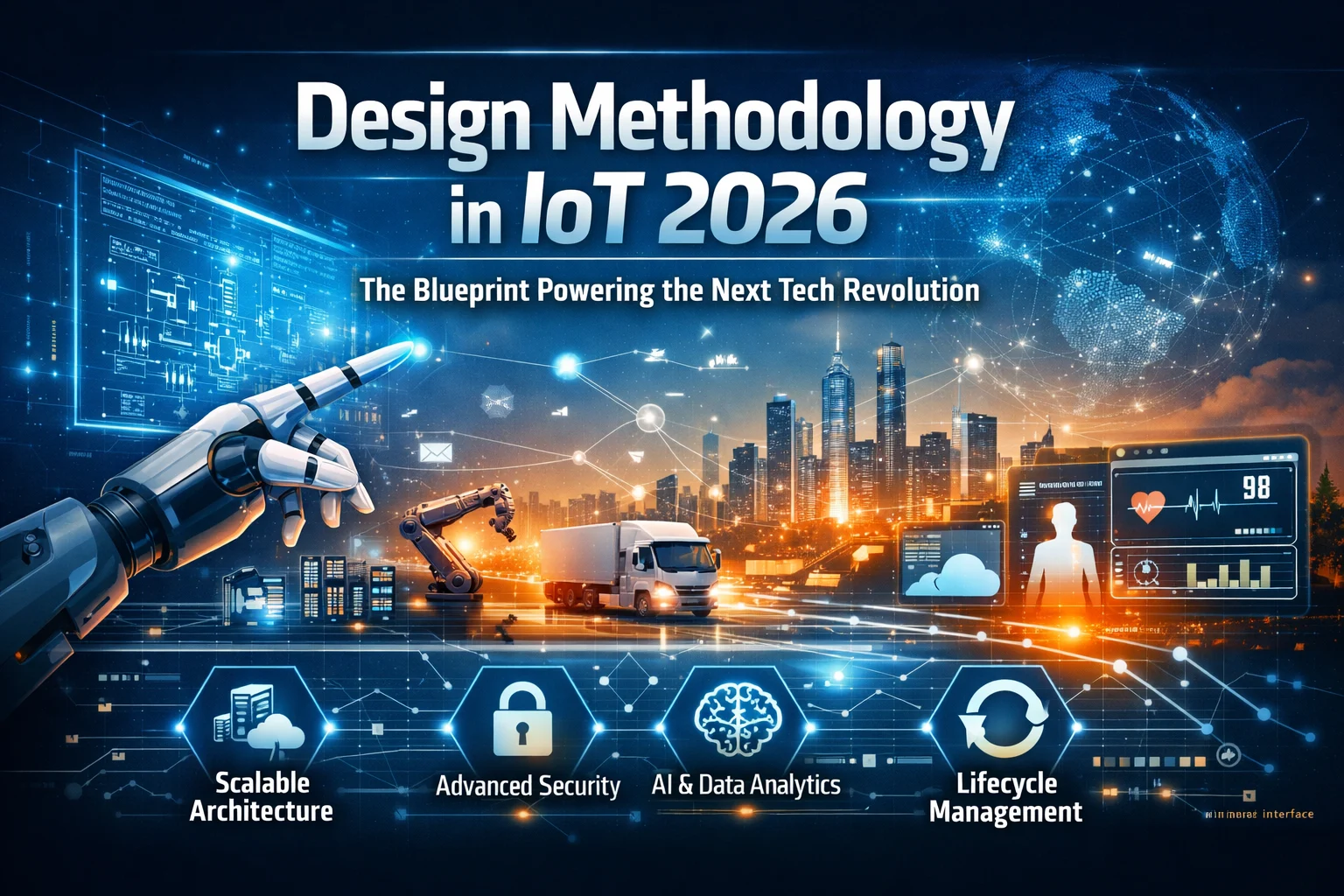
    Design Methodology in IoT 2026: The Blueprint Powering the Next Tech Revolution

    Design Methodology in IoT 2026

    In 2026, the conversation around innovation is no longer about isolated applications or standalone software — it is about ecosystems. Smart factories, intelligent healthcare systems, autonomous logistics, and adaptive smart cities all operate on one foundation: structured connectivity. At the center of this transformation is design methodology in IoT 2026, the strategic blueprint that turns connected ideas into scalable, secure, and high-performing systems. As billions of devices communicate across global networks, success is no longer determined by who connects first — but by who designs best.

    For organizations and professionals seeking clarity, this evolution serves as more than just an advanced discussion — it functions almost like an IoT Tutorial for Beginners at an enterprise level, demonstrating how structured thinking transforms innovation into infrastructure.

    The Internet of Things has matured. Organizations are no longer experimenting with pilot programs alone; they are deploying mission-critical infrastructures. With this growth comes complexity, and complexity demands structure. That structure is built through a disciplined IoT system design process — a process that now resembles A complete guide to IoT design for enterprises aiming to build long-term digital ecosystems.


    The Expanding Smart Device Ecosystem in 2026

    By 2026, enterprises across industries manage thousands — sometimes hundreds of thousands — of connected endpoints. Manufacturing plants rely on real-time sensor networks. Hospitals use remote patient monitoring devices. Logistics fleets track location, fuel efficiency, and predictive maintenance metrics simultaneously.

    The average industrial IoT deployment now generates massive volumes of streaming data every day. But raw connectivity does not equal intelligence. Many organizations have learned that scaling devices without a proper IoT architecture framework leads to bottlenecks, fragmented data silos, and increased cybersecurity risk.

    This is why connected systems design in 2026 is not just technical — it is strategic. Businesses now evaluate IoT investments based on long-term scalability, interoperability, and resilience rather than short-term functionality. Increasingly, leaders are recognizing IoT Design Methodology And Its Importance as the deciding factor between experimentation and enterprise-grade success.


    Why Design Methodology in IoT 2026 Defines the Future of Connected Systems

    Design methodology in IoT 2026 represents a structured, lifecycle-driven approach to building intelligent, scalable IoT ecosystems. It integrates hardware engineering, software architecture, data analytics, cybersecurity, and cloud infrastructure into one cohesive framework.

    Unlike traditional IT systems, IoT environments must account for:

    • Continuous device communication
    • Remote firmware management
    • Dynamic network conditions
    • Real-time data analytics
    • Long device lifecycles

    This means the IoT product development lifecycle extends far beyond initial deployment. Devices must remain secure, adaptable, and upgradable for years. Understanding the process of IoT app development in 2026 is therefore essential, as applications must seamlessly integrate with hardware, edge systems, and cloud environments.

    A well-defined IoT deployment strategy ensures that every layer — device, network, edge, cloud, and application — works in harmony.


    Building Scalable IoT Solutions from Day One

    One of the biggest shifts in 2026 is designing for scale at the very beginning. Many early IoT projects failed because they were architected as small pilot systems. When organizations attempted to expand from 500 devices to 50,000, infrastructure limitations became obvious.

    Scalable IoT solutions now rely on modular architectures and cloud-native backends. Instead of hardcoding integrations, developers use API-driven frameworks that allow seamless expansion. Device identity management systems automatically onboard and authenticate new endpoints without manual configuration.

    Edge computing in IoT has also become central to scalability. Rather than sending all raw data to centralized servers, edge nodes process information locally, filtering and analyzing critical events before forwarding insights to the cloud. This reduces bandwidth consumption, lowers latency, and improves real-time responsiveness.

    For example, in industrial automation, edge-based predictive maintenance systems can identify anomalies within milliseconds, preventing costly machine failures without overwhelming cloud infrastructure.

    Scalability is no longer an afterthought. It is embedded within the design methodology itself.


    Security as a Core Design Principle

    As IoT ecosystems grow, so does the attack surface. Each connected sensor, gateway, or embedded controller represents a potential vulnerability. In 2026, cybersecurity incidents involving connected devices can disrupt supply chains, compromise sensitive data, or halt production lines.

    That is why an IoT security framework is a non-negotiable pillar of modern design methodology.

    Security in IoT is now implemented across multiple layers:

    Device-level security ensures secure boot processes and hardware-based encryption.
    Network-level security enforces encrypted communication protocols and secure authentication.
    Application-level security protects data integrity and access control.

    Zero-trust architecture has become common practice, where every device and user must continuously verify identity before accessing the system.

    Designing security from the beginning — rather than patching it later — significantly reduces long-term risk and maintenance costs. In 2026, security is not a feature; it is a foundational requirement.


    Data as the Strategic Asset

    Connected devices continuously produce massive streams of both organized and raw information. But the true competitive advantage lies in transforming that data into intelligence.

    Modern connected systems design integrates analytics engines and AI models directly into the architecture. Information workflows are engineered to deliver insights quickly without compromising stability. Instead of storing everything indefinitely, systems now prioritize meaningful insights.

    For example, predictive algorithms can analyze vibration patterns in machinery to forecast maintenance needs weeks in advance. Smart energy systems dynamically adjust power distribution based on consumption trends. Healthcare monitoring platforms detect irregular vital signs in real time.

    This shift from passive data collection to active intelligence defines IoT innovation in 2026. Design methodology ensures that data flow, storage, and analytics are strategically aligned with business objectives.


    Interoperability and Integration in a Fragmented Landscape

    IoT environments often involve diverse devices from multiple vendors. Without interoperability standards, integration becomes expensive and inefficient.

    Modern IoT architecture frameworks prioritize open standards, API compatibility, and protocol flexibility. Systems are built to communicate across platforms without requiring extensive customization.

    This interoperability enhances innovation. When devices and platforms can share information seamlessly, organizations can expand ecosystems without replacing existing infrastructure.

    In large smart city deployments, for instance, traffic sensors, environmental monitors, and public transportation systems must exchange data smoothly. A strong IoT system design process ensures such integration happens predictably and securely.


    The Lifecycle Perspective: From Concept to Continuous Optimization

    Another defining aspect of design methodology in IoT 2026 is lifecycle awareness. IoT projects are not one-time launches — they are evolving systems.

    The lifecycle typically includes conceptualization, prototyping, validation, deployment, monitoring, and optimization. Continuous monitoring tools now track device performance, connectivity reliability, and system health in real time.

    Firmware updates are deployed remotely. Analytics dashboards reveal usage trends and system bottlenecks. Optimization becomes an ongoing process rather than a reactive fix.

    Organizations that embrace this lifecycle mindset achieve greater resilience and longer system longevity.


    The Competitive Advantage of Structured IoT Design

    In competitive markets, speed matters — but sustainability matters more. Companies that rush IoT deployments without proper methodology often face hidden costs: system redesign, cybersecurity remediation, and operational inefficiencies.

    Conversely, organizations that adopt a disciplined IoT deployment strategy benefit from:

    • Faster scaling without architectural overhaul
    • Lower maintenance costs
    • Improved data accuracy and reliability
    • Stronger cybersecurity posture
    • Higher long-term return on investment

    The difference lies not in the devices themselves, but in the blueprint behind them.


    Conclusion: The Strategic Imperative of Design Methodology in IoT 2026

    As connected ecosystems become the backbone of industries worldwide, design methodology in IoT 2026 stands as the defining factor between fragmented experimentation and scalable innovation. It integrates architecture, security, analytics, scalability, and lifecycle management into one cohesive system-building philosophy.

    In a world driven by smart device ecosystems, edge computing in IoT, and AI-powered analytics, organizations cannot afford reactive development. They must build with intention. They must architect for growth. They must secure from the start.

    The next tech revolution is not being powered merely by connected devices — it is being powered by those who understand how to design them strategically. And in 2026, that strategy begins — and succeeds — with design methodology in IoT 2026.


    Frequently Asks Questions

    1. What is the IoT design methodology?

    The IoT design methodology is a structured framework used to plan, develop, deploy, and manage connected systems. It ensures that devices, networks, applications, and cloud infrastructure work together seamlessly.

    In simple terms, it is the blueprint behind every successful connected ecosystem. In Design Methodology in IoT 2026, this approach goes beyond just connecting devices — it focuses on scalability, cybersecurity, interoperability, and lifecycle management.

    Instead of building isolated solutions, IoT design methodology ensures that systems are secure, scalable, data-driven, and future-ready from day one.

    2. How many steps are in the IoT design methodology?

    There is no single fixed number, but most modern frameworks — especially under Design Methodology in IoT 2026 — follow 5 to 7 core stages.

    Typically, the steps include:

    1. Problem definition and requirement analysis

    2. System architecture design

    3. Hardware and device selection

    4. Application and cloud development

    5. Testing and validation

    6. Deployment

    7. Monitoring and optimization

    Many experts describe it as a complete guide to IoT design, where each stage builds upon the previous one to ensure reliability and long-term scalability.

    3. What is the methodology of an IoT project?

    The methodology of an IoT project is a lifecycle-driven process that guides the project from concept to continuous optimization.

    In 2026, the process of IoT app development is tightly integrated with hardware engineering, edge computing, cybersecurity frameworks, and cloud analytics. A modern IoT project methodology includes:

    • Defining business objectives

    • Designing architecture (device, network, edge, cloud)

    • Developing firmware and applications

    • Integrating data analytics and AI

    • Ensuring end-to-end security

    • Continuous performance monitoring

    The key idea behind IoT Design Methodology And Its Importance is that success depends on planning for scale, security, and long-term evolution — not just deployment.

    4. What are the 4 types of IoT?

    The four major types of IoT are:

    1. Consumer IoT (CIoT) – Smart home devices, wearables, connected appliances

    2. Commercial IoT – Smart healthcare systems, retail analytics, smart buildings

    3. Industrial IoT (IIoT) – Manufacturing automation, predictive maintenance, supply chain tracking

    4. Infrastructure IoT – Smart cities, traffic systems, energy grids

    In Design Methodology in IoT 2026, each category requires a tailored architecture strategy because industrial systems, for example, demand stronger security and real-time processing compared to consumer IoT.

    5. What are the 5 steps of methodology?

    While methodologies vary, the most common 5-step model includes:

    1. Planning – Define objectives and requirements

    2. Design – Create system architecture and technical blueprint

    3. Development – Build devices, firmware, and applications

    4. Testing – Validate performance, security, and scalability

    5. Deployment & Monitoring – Launch and continuously optimize

    In the context of Design Methodology in IoT 2026, monitoring and optimization are ongoing processes, not final steps. The system evolves continuously.

    6. What is a methodology example?

    A methodology example in IoT could be building a smart factory monitoring system.

    Step-by-step example:

    • Identify machine performance challenges

    • Design an IoT architecture with edge sensors

    • Develop a cloud-based analytics dashboard

    • Implement encrypted device communication

    • Deploy predictive maintenance algorithms

    This structured approach reflects IoT Design Methodology And Its Importance, ensuring that the solution is scalable, secure, and data-driven.

    7. What is basic methodology?

    Basic methodology refers to a systematic way of solving a problem or completing a project. It provides a clear sequence of steps to achieve a goal efficiently.

    In IoT, even a basic methodology includes:

    • Defining the problem

    • Designing the solution

    • Developing and testing

    • Deploying and maintaining

    For beginners, understanding this concept works like an IoT Tutorial for Beginners, helping them grasp how connected systems are built logically rather than randomly.

    8. What are the key steps of methodology?

    The key steps of any strong methodology — especially in Design Methodology in IoT 2026 — include:

    • Requirement analysis

    • Architecture design

    • Development and integration

    • Security implementation

    • Testing and validation

    • Deployment

    • Continuous monitoring and improvement

    The power of modern IoT methodology lies in its lifecycle perspective. It does not end at deployment — it ensures systems remain secure, scalable, and intelligent for years.