My blog
Summary
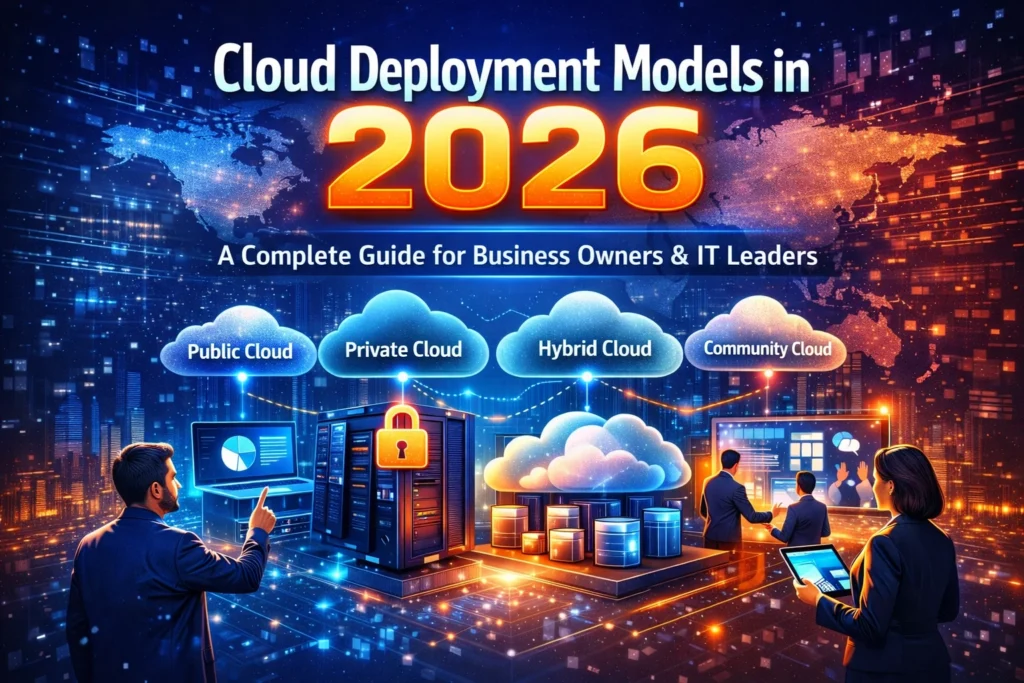
Understanding Cloud Deployment Models in 2026 is essential for businesses that want to adopt cloud computing efficiently and securely. Cloud deployment models define how cloud infrastructure is hosted, managed, and accessed by organizations. The four primary models include public cloud, private cloud, hybrid cloud, and the community cloud deployment model. Each model offers different advantages depending on business size, security needs, compliance requirements, and scalability goals.
For many organizations in 2026, the hybrid cloud deployment model has become the most flexible option because it combines the benefits of both private and public cloud environments. Businesses can store sensitive data securely in a private environment while using public cloud services for scalability and cost efficiency.
When selecting among the types of cloud deployment models, companies must consider factors such as data security, operational cost, IT control, and business growth. By understanding these models and evaluating real-world cloud computing deployment models examples, business owners and IT leaders can make informed decisions that improve performance, security, and digital transformation strategies.
Ultimately, Cloud Deployment Models in 2026 are helping organizations build scalable, secure, and cost-effective infrastructures that support innovation and long-term growth.
Introduction
The way businesses manage technology infrastructure has changed dramatically over the past decade. Traditional on-premise servers are gradually being replaced by cloud environments that provide flexibility, scalability, and remote accessibility. As organizations continue to modernize their operations, understanding Cloud Deployment Models in 2026 has become a key priority for business owners and IT leaders.
Cloud computing allows companies to store and process data through remote servers instead of maintaining expensive hardware on-site. However, simply adopting cloud technology is not enough. Businesses must choose the right deployment model to ensure efficiency, data protection, and operational flexibility.
The concept of Cloud Deployment Models in 2026 focuses on how cloud resources are organized, managed, and delivered to organizations. Different businesses have different requirements. Some prioritize cost savings and scalability, while others focus on strict data privacy and regulatory compliance.
By understanding the types of cloud deployment models, companies can select the approach that aligns best with their goals. This guide will explore each model in detail, provide cloud computing deployment models examples, and help organizations understand when to use models like the hybrid cloud deployment model or the community cloud deployment model.
What Are Cloud Deployment Models?
Cloud deployment models define how cloud infrastructure is implemented and who has access to it. They determine where data is stored, how applications are hosted, and who manages the overall environment.
In simple terms, a deployment model describes the structure of the cloud environment and the level of access provided to users or organizations. It also determines the balance between control, cost, security, and scalability.
When businesses analyze Cloud Deployment Models in 2026, they typically evaluate the following factors:
• Ownership of the infrastructure
• Data security and privacy requirements
• Accessibility and collaboration needs
• Operational costs and maintenance responsibilities
• Regulatory and compliance requirements
Different companies require different combinations of these factors, which is why several types of cloud deployment models exist today.
For example, a startup company may choose a public cloud because it offers affordable infrastructure and easy scalability. On the other hand, a financial institution might prefer a private or community cloud deployment model due to strict data security and regulatory standards.
Why Businesses Are Adopting Cloud Deployment Models in 2026
The rapid adoption of cloud computing is driven by the need for speed, flexibility, and innovation. Businesses are no longer limited by physical servers or local infrastructure. Instead, cloud solutions allow organizations to operate from anywhere while maintaining high performance and reliability.
In Cloud Deployment Models in 2026, businesses are adopting cloud strategies for several key reasons.
First, cloud environments provide excellent scalability. Companies can increase or decrease resources depending on their operational needs without investing heavily in new hardware.
Second, cloud deployment significantly reduces infrastructure costs. Organizations no longer need to maintain large data centers or expensive IT equipment.
Third, cloud platforms enable seamless collaboration. Employees can access applications and files from multiple locations, improving productivity and remote work capabilities.
Fourth, modern cloud systems offer advanced security features such as encryption, automated backups, and disaster recovery mechanisms.
Finally, cloud adoption allows businesses to focus on innovation rather than infrastructure maintenance. Instead of spending resources on managing servers, companies can invest in product development, customer service, and strategic growth.
Because of these advantages, Cloud Deployment Models in 2026 have become an essential part of digital transformation strategies across industries.
Types of Cloud Deployment Models
There are four major types of cloud deployment models used by organizations worldwide. Each model serves a unique purpose and is designed for different operational needs.
Understanding these models helps businesses choose the most suitable environment for their applications, data storage, and digital services.
Public Cloud
The public cloud is one of the most widely used deployment models. In this model, cloud infrastructure is owned and managed by third-party providers who deliver computing resources over the internet.
Companies rent storage, processing power, and applications from providers instead of building their own infrastructure.
Some common cloud computing deployment models examples of public cloud services include hosting websites, running mobile applications, managing development environments, and storing business data.
Public cloud environments are highly scalable and cost-effective, making them ideal for startups, small businesses, and companies with rapidly changing resource demands.
However, because the infrastructure is shared among multiple users, organizations must ensure that their data security policies and compliance standards are properly implemented.
Private Cloud
A private cloud is built exclusively for one organization. In this model, the infrastructure is either hosted on-site or managed by a third-party provider but dedicated exclusively to one company.
This model offers higher levels of control, customization, and security compared to the public cloud.
Organizations that deal with sensitive information, such as healthcare providers, financial institutions, and government agencies, often rely on private cloud environments.
In Cloud Deployment Models in 2026, private clouds continue to play a vital role for companies that require strict compliance and data protection policies.
The downside of private cloud environments is that they usually require higher operational costs because businesses are responsible for maintaining the infrastructure.
Hybrid Cloud Deployment Model
The hybrid cloud deployment model combines both public and private cloud environments. It allows businesses to store sensitive data in private infrastructure while using public cloud resources for less critical workloads.
This model has become increasingly popular in Cloud Deployment Models in 2026 because it offers the best balance between flexibility, security, and cost efficiency.
For example, a company might keep customer databases in a private cloud while running marketing applications in the public cloud. This approach allows organizations to maintain security while benefiting from the scalability of public cloud services.
The hybrid approach is especially beneficial for companies that want to modernize gradually without completely replacing their existing infrastructure.
Community Cloud Deployment Model
The community cloud deployment model is designed for organizations that share similar goals, security requirements, or regulatory standards.
In this model, multiple organizations share a cloud infrastructure that is specifically designed to meet their collective needs.
For instance, several hospitals may use a community cloud to store patient data while complying with healthcare regulations. Similarly, government agencies may share a community cloud environment to manage public services securely.
The community cloud deployment model provides a balance between cost efficiency and data security, making it ideal for industries that require collaboration and regulatory compliance.
Cloud Computing Deployment Models Examples
To better understand how these models work, let’s look at some practical cloud computing deployment models examples used by modern organizations.
A technology startup launching a mobile application may use a public cloud platform to host its servers and databases. This approach allows the company to scale quickly as user demand grows.
A multinational bank may rely on a private cloud environment to store financial records and maintain strict security standards.
An e-commerce company might implement the hybrid cloud deployment model to manage customer transactions securely while running its website and analytics tools on the public cloud.
Universities or research institutions may collaborate through a community cloud deployment model to share research data and computing resources.
These examples demonstrate how businesses choose different cloud deployment strategies depending on their specific needs and operational priorities.
How to Select the Right Cloud Deployment Model
Selecting the right cloud strategy is not simply a technical decision. It is a strategic choice that affects cost management, security policies, and business scalability.
When evaluating Cloud Deployment Models in 2026, business owners and IT leaders should consider several important factors.
First, data security is a major concern. Companies dealing with sensitive customer information may prefer private or hybrid environments.
Second, budget constraints can influence the decision. Public cloud environments are typically more affordable for startups and small businesses.
Third, regulatory compliance requirements must be carefully evaluated, especially in industries such as healthcare, finance, and government services.
Fourth, scalability needs play an important role. Businesses expecting rapid growth may benefit from the flexibility offered by hybrid or public cloud models.
Finally, IT management capabilities should also be considered. Some organizations prefer cloud environments that reduce the burden on internal IT teams.
By carefully analyzing these factors, companies can determine which of the types of cloud deployment models best supports their operational goals.
Future Trends in Cloud Deployment Models in 2026
As technology continues to evolve, Cloud Deployment Models in 2026 are also undergoing significant transformation.
One major trend is the rise of multi-cloud strategies, where organizations use multiple cloud providers to avoid dependency on a single platform.
Another trend is the integration of artificial intelligence and automation into cloud management systems. AI-driven monitoring tools can automatically optimize resources, detect security threats, and improve system performance.
Cybersecurity is also becoming a central focus. Cloud providers are investing heavily in advanced encryption, threat detection, and identity management technologies to protect business data.
Industry-specific cloud solutions are also gaining popularity. Many providers now offer specialized cloud environments designed for healthcare, finance, education, and manufacturing sectors.
These innovations are shaping the future of Cloud Deployment Models in 2026, making cloud infrastructure more intelligent, secure, and adaptable to modern business needs.
Conclusion
As organizations continue their digital transformation journey, understanding Cloud Deployment Models in 2026 is more important than ever. The way a business deploys its cloud infrastructure directly affects performance, security, scalability, and operational efficiency.
From public cloud environments that offer cost-effective scalability to private infrastructures that provide strict security control, each model serves a specific purpose. The hybrid cloud deployment model offers flexibility by combining multiple environments, while the community cloud deployment model supports collaboration among organizations with shared requirements.
By carefully evaluating the types of cloud deployment models and analyzing real-world cloud computing deployment models examples, business owners and IT leaders can choose the strategy that aligns best with their technological and business goals.
Ultimately, Cloud Deployment Models in 2026 are not just about technology. They represent a strategic foundation that helps businesses innovate, scale, and compete effectively in an increasingly digital economy.
Frequently Asked Questions
How do I choose a cloud deployment model?
Choosing the right cloud deployment model depends on your business requirements, security needs, and budget. When evaluating Cloud Deployment Models in 2026, organizations should consider factors such as data sensitivity, regulatory compliance, scalability, and operational costs. For example, startups often prefer public cloud environments because they are affordable and easy to scale, while enterprises handling sensitive data may choose private or hybrid environments. Among the types of cloud deployment models, many businesses now adopt the hybrid cloud deployment model because it provides a balance between security, flexibility, and cost efficiency.
Which cloud deployment model is most commonly used?
The most commonly used model today is the public cloud. Many companies rely on public cloud services because they provide scalable infrastructure without requiring heavy investments in physical servers. In Cloud Deployment Models in 2026, public cloud platforms are widely adopted by startups, digital businesses, and growing enterprises that need flexible computing resources. These environments allow organizations to run applications, host websites, and store data with minimal infrastructure management.
Which cloud deployment model is cheapest?
The public cloud is generally considered the most cost-effective option. Businesses pay only for the resources they use, which eliminates the need for expensive hardware and maintenance. In most cloud computing deployment models examples, startups and small businesses choose public cloud environments because they offer affordable pricing and rapid scalability. This makes it easier for companies to launch digital services without investing heavily in IT infrastructure.
Which deployment model provides the highest level of security?
The private cloud is typically considered the most secure deployment model because it is dedicated to a single organization. This allows businesses to maintain complete control over their infrastructure, security policies, and data management systems. However, in Cloud Deployment Models in 2026, many enterprises are also implementing the hybrid cloud deployment model to combine the security of private environments with the scalability of public cloud resources.
What is the most popular cloud service model?
Among cloud service models, Software as a Service (SaaS) is the most popular. SaaS applications allow businesses to access software through the internet without installing or managing systems locally. In modern Cloud Deployment Models in 2026, SaaS platforms are widely used for tools such as customer relationship management, project management, collaboration software, and business analytics, making them a core part of cloud-based business operations.
My blog is proudly powered by WordPress